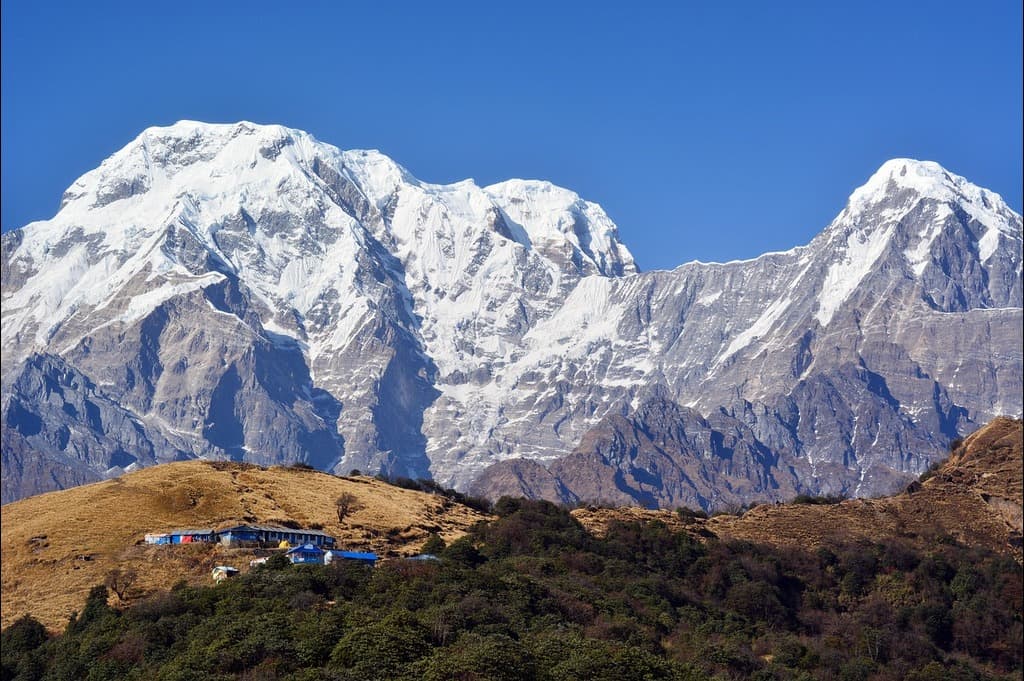
A blend of a comfortable city hotel, best-available teahouse lodges on the trail, and a fully serviced tented camp at Island Peak Base Camp. Properties may vary by date; where a featured option is unavailable, a similar standard will be confirmed.
| Place |
Accommodation |
| Kathmandu |
Hotel Norbulinka (or similar) |
| Ramechhap / Manthali |
Simple lodge (best available) |
| Phakding |
Teahouse lodge (best available) |
| Namche Bazaar |
Teahouse lodge (central location) |
| Khumjung |
Village teahouse (best available) |
| Phortse |
Family-run teahouse |
| Dingboche / Pheriche |
High-altitude teahouse (best available) |
| Lobuche |
High-altitude teahouse (best available) |
| Gorak Shep |
Teahouse at glacier rim |
| Chhukung |
Teahouse (Imja Valley) |
| Island Peak Base Camp |
Tented camp (sleeping & dining tents, kitchen team) |
| Pangboche |
Teahouse (best available) |
| Lukla |
Teahouse near airstrip |
Note: Exact lodges are allocated close to departure based on availability and group size; if a named hotel/lodge is full, a property of similar standard will be provided.
IMPORTANT INFORMATION
Trip grade & fitness
Challenging high-altitude trek with a non-technical alpine summit (fixed ropes, crampons). Daily trekking 3–9 hours; one very long summit day. Solid hill fitness required and comfort with heights/exposure.
Altitude & acclimatisation
Maximum altitude 6,189m (Island Peak). Itinerary follows “climb high, sleep low” with planned rest days. Your leader monitors symptoms; you must report headache, nausea, dizziness or unusual fatigue immediately. Descent is the primary treatment for AMS.
Permits & regulations
Sagarmatha National Park, local Khumbu permits and Island Peak climbing permit included. Carry passport and permits at all checkpoints.
Flights & delays
Most Everest-region flights operate via Ramechhap (Manthali). Weather can disrupt schedules; a contingency day is built in, but additional delays are possible.
Baggage & porterage
Typical mountain-flight allowance ~10 kg checked + 5 kg hand (subject to airline policy). Trek duffel carried by porters (weight limit applies); you carry a daypack with water, layers and valuables.
Equipment
Personal technical kit required for the climb (mountaineering boots, crampons, harness, helmet, jumar/ascender, belay device, locking carabiners, slings, prusiks, ice axe, goggles). Hire is available on request; pre-book sizes early. A four-season sleeping bag (to about –20 °C) recommended.
Insurance
Mandatory comprehensive cover for trekking/climbing to at least 6,200m including helicopter evacuation and medical treatment.
Water, food & hygiene
Full board on the trek and at Base Camp. Use treated/boiled water (bring purification tablets/filter as a backup). Hand hygiene reduces illness risk at altitude.
Season & weather
Best windows: Mar–May and Oct–Nov. Expect cold mornings/evenings above 4,000m and wind on passes/summit.
Responsible & cultural travel
Leave No Trace principles; respect mani walls (pass left) and spin prayer wheels clockwise; yield to yak/mule trains from the mountain side; modest dress in monasteries.
Tipping & local costs
Tips/gratuities for trek, climbing and lodge staff are customary (guidelines provided in pre-departure notes). Budget for showers, charging, Wi-Fi and personal snacks on the trail.
SAFETY, RISK & INSURANCE – PLEASE READ
Knowledge & Acceptance of Risk
Trekking and climbing in the Himalaya involves inherent hazards: high altitude (risk of AMS/HAPE/HACE), cold, wind and rapid weather change; rough, steep and exposed terrain; rock/icefall and crevasses; interaction with livestock/pack animals; remote locations with limited medical facilities; and flight/road disruption from weather or geohazards. By booking, you confirm you understand and accept these risks and will follow guide instructions at all times.
Domestic Flights, Safety & the EU Air Safety List (Nepal)
Everest-region flights typically operate on short take-off/landing (STOL) aircraft between Ramechhap (Manthali) and Lukla by day and under visual conditions. Weather, visibility and airfield constraints can cause delays, diversions or cancellations. The EU Air Safety List currently includes all airlines certified in Nepal, which means they are banned from operating in EU airspace; this does not prohibit domestic operations within Nepal. We use established local carriers, schedule early flights where possible, and may switch to overland/heli alternatives if required. Final safety decisions rest with the pilots and Civil Aviation Authority of Nepal (CAAN).
Insurance – Mandatory
Comprehensive travel insurance is compulsory. Your policy must explicitly cover: trekking and mountaineering to at least 6,200 m with use of fixed ropes and crampons; helicopter evacuation and medical treatment/repatriation; trip interruption/delay (including Lukla/Ramechhap flight disruption); and baggage/equipment. Declare pre-existing conditions and carry your insurer’s 24/7 assistance details. We may request proof of cover before departure and reserve the right to decline participation without adequate insurance.
Participant Declaration & Risk Waiver (summary)
By joining you agree that, to the extent permitted by law:
- You are participating voluntarily and at your own risk, acknowledging the hazards listed above.
- You are physically fit for sustained trekking at altitude and a non-technical alpine ascent using fixed ropes and crampons.
- You will follow the leader/guide’s instructions; they may alter or curtail the itinerary for safety, weather or logistics.
- You accept that rescue/medical response in remote areas can be delayed and not guaranteed by the operator.
- You have suitable insurance and will bear any costs not covered by your policy.
Important: This summary supports (but does not replace) our full Booking Conditions and Assumption of Risk & Liability Waiver, which you will be asked to read and sign before travel.
Medical Screening & Emergency Response
Tell us about any medical conditions/medications before departure. On trek, alert your guide promptly to symptoms such as persistent headache, nausea, dizziness, unusual fatigue or cough. Descent is the primary treatment for altitude illness; our team may require you to descend or leave the itinerary for your safety. Helicopter evacuation is weather/availability/regulation dependent and cannot be guaranteed.
Operational Notes
Seasonal weather, flying conditions and local regulations may necessitate changes to flight routings (e.g., KTM↔Ramechhap transfers), daily schedules or overnight locations. Where possible we build in a contingency day; additional costs arising from force majeure are your responsibility unless otherwise stated in your booking.