DAY01
DEPART NEW YORK
Today you will board a flight to Lhasa.
Overnight on board.

Your holiday itinerary
Extraordinary journeys. Thoughtfully arranged.
Discover your journey
Om Namah Shivaya!
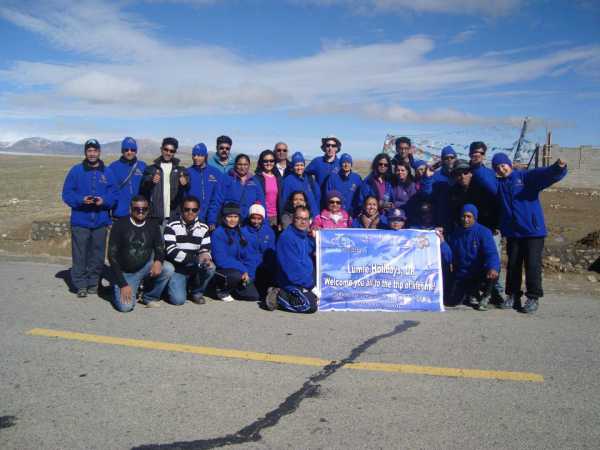
Lumle Holidays Ltd, the Kailash expert travel company extends heartfelt congratulations to all our Mount Kailash Mansarovar pilgrims for a successful completion of the yatra of lifetime; Mount Kailash Mansarovar yatra. We also extends our sincere gratitude’s to Mount Kailash Mansarovar yatris for choosing Lumle Holidays for their Mount Kailash Mansarovar yatra every year. It is a great privilege of Lumle Holidays Ltd.’s team to guide through all of you to a divine journey of Mount Kailash Mansarovar.
According to Hindu mythology, Mount Kailash is observed as Lord Shiva’s habitat. It is believed that, Lord Shiva resides and mediates with his wife Parvati on the top of Mount Kailash. Thus, Mount Kailash Mountain and known to many others as Kailash Parvat is believed to be a sacred sight, ultimate pilgrimage destination and world’s famous spiritual center. Therefore, every year, thousands of Kailash pilgrims go on for Kailash yatra.
Mount Kailash Yatra, a sacred site always comes across with the holiest Lake Mansarovar. Lake Mansarovar is the abode of purity. It is believed that, taking a bath in Mansarovar Lake and drinking it’s water, ones’ all committed sins will be washed away for lifetimes. Infact, trip to Kailash Mansarovar is a yatra of lifetime and those who went for Kailash yatra and visited these holy places viz Mount Kailash Mansarovar recall their memory of a lifetime. Infact, these yatris have been seen cheerful, happy and relieved after the completion of Kailash Mansarovar yatra. Kailash pilgrims concludes their Kailash yatra for some Kailash pilgrimage with 32 kilometres parikrama of Kailash Parvat. The Kailash yatra parikrama starts from Tarboche to Dirapuk, Zutulpuk and end ends at the same place. The parikrama is considered as an essential and part of pilgrimage to Mount Kailash Mansarovar yatra.
01. Mount Kailash Height: 21,778 ft
02. Location: Western Tibet, China
03. Climate: 0 to 70 Degrees Fahrenheit
04. Parikrama of Mount Kailash: 32 miles (over three days)
05. High point of Kailash Parikrama: 19,500 feet
06. Mansarovar Lake Height: 14,954 feet
07. Parikrama of Mansarovar Lake: 63 miles (by bus)
08. Mount Kailash Season: best season to visit the place is from May to November
09. Mount Kailash: Not a single human has ever attempted to scale the Mount Kailash
10. Religions to which Mount Kailash is of importance: Bon, Buddhism, Jainism, Hinduism
Do not just dream; relish the real ecstasy of life in a regale tour to the most enchanted place on the earth. It has been proclaimed by thousands of pilgrims that, Kailash is not just the mountain’s ice – capped summit but the entire region is the abode of the Gods.
Mount Kailash Mansarovar yatra, the pilgrimage of lifetime Mount Kailash Mansarovar is renowned worldwide from Shiva’s devotees to those people who love adventures. Infact, it is truth to say that, God is ubiquitous however in the meantime, it is additionally said that, in some place the heavenly is significantly more present. Mount Kailash worshiped Shiva Lingan formed mountain has been mindful otherworldly and sacrosanct site for Shiva’s aficionados.
Tour Ends
Your journey at a glance
Every day, a new discovery
Today you will board a flight to Lhasa.
Overnight on board.
Upon arrival at airport. Our vehicle will pick you and transfer to the hotel.
Overnight in Chengdu.
Today you will arrive in Tibet’s capital, the holiest city Lhasa. Our representative will meet and greet you at the airport and transfer to the hotel. Once you arrive, our local Tibetan tour guide and driver will greet you at Lhasa Airport to transfer you to the hotel. From the airport to downtown Lhasa, it takes about 1-2 hours, but it will provide stunning views of the Yarlung Tsangpo River and its backdrop of snowcapped mountains. After being transferred to the hotel, you will be free to wander around the city on your own for the rest of the day but try not to overtax yourself. The first day’s well-rest is crucial to acclimatize to the high altitude. Remember to drink lots of water, eat light, and not take a shower if you can help it.
Overnight in Lhasa.
After breakfast at the hotel, we will pick you up to take you for a Lhasa tour. Visit Jokhang temple. The Jokhang Temple is the holiest in Tibet, housing the life-size image of Buddha Jowa Sakyamuni. The outstanding architectural style and devoted pilgrimage are the best highlights of this 1300-year-old monastery. You will also visit Barkhor Street. Barkhor Street (sometimes spelled Bakhor Street) is the most famous walking street in Lhasa. It is in the heart of the Old Town – the oldest part of the capital. Barkhor Street is the kora route around the 7th-century Jokhang temple; therefore, you should walk there in a clockwise direction. Later, visit Sera monastery, one of Tibet’s great three Gelukpa University monasteries, where you can observe the lively monk debates that take place throughout the day.
Overnight in Lhasa.
After breakfast at the hotel, we will pick you up to take you to visit Potala Palace, one of Tibet’s most iconic landmarks and once home to the Dalai Lama. It was built by the 33rd great king of Tibet – Songtsen Gangpo in the 7th Century. The most valuable collections of Potala Palace are the gilded burial stupas of former Dalai Lamas and the meditation Cave of the 33rd great king of Tibet. Later, you will visit Norbulingka, which is a typical Tibetan-style royal garden, the summer resort of the Dalai Lama.
Overnight in Lhasa.
Today you will start your scenic road trip, coming to one of Tibet’s most incredible landscapes – Yamdrok Lake (at an altitude of 4,441m) and its surrounding snowcapped mountains. We will pass by Kampala Pass (4,790m) on the way from Lhasa to Shigatse and visit Yamdrok Lake, one of the three holy lakes in Tibet. Standing at the lakeside, you can see its blue water shimmering with charming light, as well as the snow-capped holy Mount Nyenchen Khangsar (7,191m) in the distance. The lake is one of Tibet’s three holy lakes, and it’s believed to be the essence of the country. Next, we will pass and enjoy the Karola Glacier (5,400m) on the roadside. It is about 300m from the main highway on your way to Gyantse. Then visit the main monastery in Gyantse – Pelkor Chode Monastery, famous for its exquisite architecture and intact murals and statues. Afterward, drive to Shigatse (3,900m).
Overnight in Shigatse.
Today you’ll be heading to the base of the world’s highest mountain- Mount Everest! In the morning, you will leave Shigatse to Lhatse, a small town located 150 km from Shigatse, and you may have lunch in the local restaurant. After a short rest, you will go ahead to Tingri. You will pass through the first high mountain pass – Tsola Pass (4,600m), then the second one-Gyatsola Pass(5,248m), the mountain pass of Mt. Everest National Nature Reserve, with countless prayer flags flying in the wind. Afterward, you will keep ascending to Gawula Pass (5,198m), where you can enjoy the panorama of the Himalayas. Then you will drive along the zigzag road to the Everest Base Camp (5,200m).
Arriving at Rongphu in the late afternoon, you’ll walk up the little hill near Rongphu Monastery (the world’s highest temple) for an amazing sunset view (weather permitting), located only 25 miles from the majestic mountain’s peak Everest Base Camp. Remaining time at your leisure which you may choose to rest or hike around, in the company of your Tibetan guide, take photo opportunity to capture Mt. Everest, enjoy the stunning views, and spend the night amongst the monumental mountains. If it’s summertime (usually May-Oct), you will stay overnight at the nomad tents of the Everest Base Camp; if wintertime (usually Nov-Apr), you will stay at Rongbuk Monastery’s guesthouse. Both places have but only dorm bed lodging available. From both places, you can see the glorious Everest sunset if the weather is good.
Overnight in Rongbuk.
You can get up early and enjoy the sunrise of Everest Peak at Everest Base Camp if the weather is good. After that, drive to Saga, on the way, you can view the world’s 14th-highest peak Mt.Shishapangma (8,012m). Later, you will reach Lake Peikutso (4,590m) and have a rest there. Then continue to Saga (4,600m), If you are lucky enough, you are very likely to see wild animals like the wild donkey, wild antelope, etc.
Overnight in Saga.
Today, you will spend a lot of time on the way, but it’s worth seeing the landscape along the way. You’ll have stunning views of the great Himalayas to the south and Trans-Himalayan to the north as we drive across the vast plains. This region is home to nomads, you’ll see the beautiful grassland and local villages. As we cross the Mayomla Pass (5112m), you can enjoy the spectacular vista of Mt. Naimonanyi (7694m).
During this thrilling journey, you’ll pass by dunes, mountains, and sandstone valleys before we reach the Darchen(4560m), a small nomadic village and an important launch point for pilgrimages around Mt. Kailash. Upon your arrival, you can explore the Darchen town on your own. If you need porters and yaks, your tour guide will arrange it for you this afternoon.
Overnight in Darchen.
In the morning, you will take an eco-bus (included in the cost) to Sarshung Valley and start trekking from there. Then you will meet your porters and yaks at Sarshung Valley (the cost of hiring yaks, horses, and porters is not included in the package). You’ll trek about 15 km from Sarshung Valley to Drirapuk Monastery along the Lachu River Valleys. During your trekking today, you can see both the west and north face of Mt.Kailash. Finally, you will visit Drirapuk Monastery and stay overnight here.
Overnight in Dirapuk.
Today is the most challenging day of the trekking, you’ll climb over the highest pass of the Kora, the Dromala pass (5630m). After a short rest at the top, we will climb down into the long valley and stop for lunch at the Shabjay Dakpo nomadic tent. On the way, you can have a rest in a teahouse. Then you will continue to the Zultulpuk, built by two important religious figures, Milarepa and Naro Bonchung. At last, you will visit Zutulpuk Monastery. You will find the footprint and handprint of Milarepa inside the cave.
Overnight in Zutulpuk.
It’s an easy day of the trek. You’ll trek 14km to complete the Kora then take the bus back to Darchen. According to Buddhist theory, doing a kora around a holy mountain for one circle can get rid of sins and miseries for the whole life. Only after going through lots of hardships, you can feel the happiness and gratification brought by Kora. Then you take the shuttle bus back to Darchen, about 3km. We will hit the road again and drive to our next destination, Zhada. Following the zigzag road with eroded gorges and gullies, we slowly enter the wider Sutlej Valley. After crossing a small bridge, we finally reach Zhada.
Overnight in Zhada.
You can visit the ruins of the mysterious ancient Guge Kingdom and Tholing Monastery, which are centered in the present Zhada County. We will drive you to Mansarovar (4560m), the top holy lake in Tibet. It’s 40km to the southwest of Darchen. If the weather is good, you can see the splendid scenery of the lake Manasarovar. If you feel good, you can do a trek along the shore of the lake for a while.
Overnight in Manasarovar.
Today we’ll drive from Manasarovar to Saga.
Overnight in Saga.
You will get back to Shigatse via Sakya County. There is a famous Tibetan Buddhist monastery in Sakya County – Sakya Monastery, the main monastery of Sakyapa. It was built in the 1360s. The walls around this monastery were mainly gray, but the top part of the walls was painted in red and white stripes. That’s why Sakyapa is also called Variegated Buddhism.
There are many cultural relics such as seals, Buddha statues, a large collection of books, exquisite murals, etc. The murals of the Yuan Dynasty are the most distinctive, which makes Sakya Monastery known as the “second Dunhuang”.
Overnight in Shigatse.
Today, we will drive back to Lhasa from Shigatse along the Friendship Highway, the northern route. On the way, you’ll see the Yarlung Tsangpo valley. In Nyemo, you’ll have a chance to visit the Tibetan Incense Workshop. Nyemo County has a history of more than 1,000 years. Except for sacrificial ceremonies, this fragrant incense also can be used to prevent infectious diseases like flu and influenza, for its ingredients contain herbal medicines such as saffron, Sandalwood, Chinese Usnea, and borneol.
Overnight in Lhasa.
Your tour ends today. You will be transferred to the Lhasa airport for your next destination.
Tour Ends
Please note
Comfortable and light clothing is best suited to travel in the warm months and warm clothing in the colder months in China. Visitors should not wear sleeveless shirts, shorts, short skirts or sparse clothing when visiting temples, religious or official buildings. Sun protection, sunglasses and a hat can be very useful during your stay.