Brazil, Argentina & Chile
Rainforests, Wine, Patagonia, Culture & Beaches
Experience the breathtaking beauty of the Andes, marvel at Iguazu's plunging waters, indulge in some of the best wines and excellent cuisine the continent has to offer, and learn about three amazing, contrasting towns with included tours.


18 days
Cultural Holidays
From
USD 8,696
pp
USD 11,860
Save up to USD 3,164 pp
Up to 27% Off
60% deposit to book
Remaining 40% due three months before departure. Full payment within 90 days.
18 Days
Duration
3 Countries
Argentina • Brazil • Chile
Flights Included
Flights from New York
Cultural Holidays
More personal experience
Guided Holiday
Expert local guides
ABTOT Bonded
ABTOT 5338 · Eligible packages
OVERVIEW
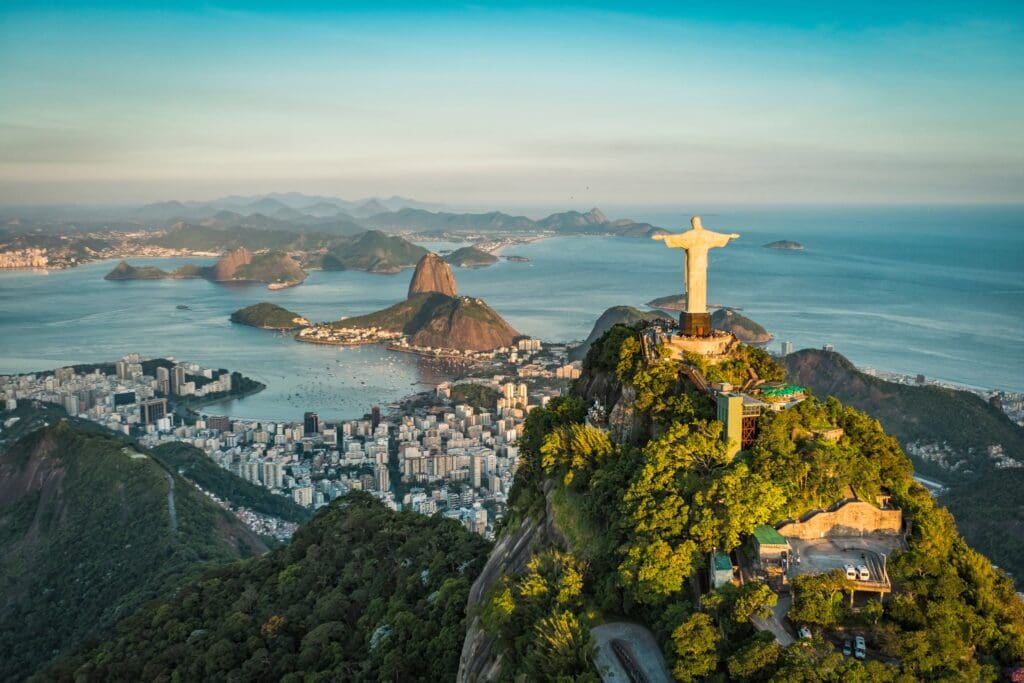
Embark on an unforgettable journey through South America, beginning in the legendary city of Rio de Janeiro. Gaze up at the towering Christ the Redeemer, soak in panoramic views from Sugarloaf Mountain, and feel the pulse of Brazil’s cultural heart as you stroll along the golden shores of Copacabana and Ipanema. From here, fly to the lush rainforest surrounding the mighty Iguazú Falls, where you’ll stand mesmerised by the roaring torrents of the Devil’s Throat and explore panoramic trails through UNESCO-listed natural wonders.
Continue to the vibrant streets of Buenos Aires, Argentina’s captivating capital. Discover the elegant avenues of Recoleta, home to ornate palaces and Evita’s resting place, explore the cobbled charm of San Telmo, and feel the soul of tango in the lively quarters of La Boca. Then venture to the end of the Earth in Ushuaia, the world’s southernmost city, nestled between the Andes and the Beagle Channel. Cruise past islands of sea lions and cormorants and explore the dramatic wilderness of Tierra del Fuego National Park.
Your Patagonian adventure continues in El Calafate, where you’ll witness the sheer majesty of the Perito Moreno Glacier. Watch in awe as towering ice cliffs calve into icy blue waters. Cross into Chile to discover the jaw-dropping landscapes of Torres del Paine National Park, a sanctuary of rugged peaks, turquoise lakes, and roaming guanacos, with highlights including Grey Lake, Salto Grande, and views of the Cuernos del Paine.
The journey then takes you to the starkly beautiful Atacama Desert, the driest non-polar desert on Earth. From your base in San Pedro de Atacama, explore otherworldly terrains such as the sculpted dunes of Moon Valley, the high-altitude lagoons of Miscanti and Miñiques, and the geyser fields of El Tatio at sunrise. Optional experiences reveal ancient petroglyphs, floating in salty lagoons, and the surreal hues of Rainbow Valley.
Conclude your adventure in Santiago de Chile, a cosmopolitan city framed by the Andes and steeped in culture. Discover colonial architecture at Plaza de Armas, modern high-rises in Providencia, and leafy parks and cafés dotted across the city. Whether sipping Chilean wine or simply absorbing the final moments of your trip, Santiago provides the perfect ending to your sweeping exploration of Brazil, Argentina, and Chile.
This South America itinerary seamlessly combines natural wonders, vibrant cities, and rich cultural encounters. From the thunderous falls of Iguazú and the icy face of Perito Moreno to the silent vastness of Atacama and the bustling streets of Santiago, this adventure will leave you with memories that last a lifetime.
Short Itinerary
Day 01 Departure from NEW YORK – Begin Your South American Journey
Day 02 Arrive in Rio de Janeiro – Welcome to the Marvelous City
Day 03 Christ the Redeemer & Cultural Icons of Rio de Janeiro
Day 04 From Rio de Janeiro to Puerto Iguazu – Discover the Brazilian Side of the Falls
Day 05 Full-Day Exploration of the Argentinian Side of Iguazu Falls
Day 06 From Puerto Iguazu to Buenos Aires – Explore Argentina’s Capital
Day 07 From Buenos Aires to Ushuaia – Gateway to the End of the World
Day 08 Navigate the Beagle Channel – Wildlife and Lighthouse Wonders
Day 09 From Ushuaia to El Calafate – Gateway to Glaciers
Day 10 Full-Day Perito Moreno Glacier Excursion – A Natural Wonder of Patagonia
Day 11 From El Calafate to Puerto Natales – Crossing Borders into Chilean Patagonia
Day 12 Full-Day Excursion to Torres del Paine National Park – Patagonia’s Crown Jewel
Day 13 From Puerto Natales to Santiago – Journey from Patagonia to the Capital
Day 14 From Santiago to San Pedro de Atacama – Enter the World's Driest Desert
Day 15 Altiplanic Lagoons & Atacama Salt Flat – A Journey to Chile’s High Andes
Day 16 San Pedro de Atacama – Explore the Wonders of the Atacama Desert (Optional Experiences)
Day 17 San Pedro de Atacama – Calama – Santiago de Chile
Day 18 Farewell to Santiago – Departure for NEW YORK
Trip Highlights
Key moments at a glance
-
Christ the Redeemer: Iconic statue & city views.
-
Atacama Desert: Valleys, salt flats & volcanoes.
-
Sugarloaf Mountain: Panoramic cable car ride.
-
Iguazú Falls: Both Brazil & Argentina sides.
-
Chilean Wonders: Santiago to Patagonia.
-
Torres del Paine: Glaciers & wild landscapes.
-
Buenos Aires: Tango, cafés & architecture.
WHAT'S INCLUDED
-
Return international flights from NEW YORK to Rio de Janeiro, and return from Santiago de Chile to NEW YORK, including taxes and airline surcharges.
-
All internal flights within South America: from Rio to Iguazú, Iguazú to Buenos Aires, Buenos Aires to Ushuaia, Ushuaia to El Calafate, Punta Arenas to Santiago, Santiago to Calama, and return from Calama to Santiago.
-
17 nights’ accommodation in hand-picked hotels that offer comfort, authenticity, and location — from vibrant city stays to serene natural retreats.
-
Daily breakfast throughout the tour, along with selected lunches during full-day excursions (as indicated in the itinerary).
-
All necessary transfers by shared or private service, including airport and intercity transfers as noted in the itinerary.
-
Professional English-speaking guides during all scheduled sightseeing tours and excursions.
-
Extensive sightseeing tours and immersive experiences, including:
- A private tour to Corcovado and the iconic Christ the Redeemer statue in Rio de Janeiro.
-
A full-day adventure to the Argentinian side of Iguazú Falls, including the dramatic Devil’s Throat.
-
Guided walking tour through the heart of Buenos Aires, from San Telmo to Recoleta.
-
Exploration of Tierra del Fuego National Park and a boat trip along the Beagle Channel in Ushuaia.
-
Visit to the awe-inspiring Perito Moreno Glacier in El Calafate.
-
A full-day scenic journey through Torres del Paine National Park, one of the world’s most spectacular wilderness areas.
-
Stargazing and surreal landscapes in San Pedro de Atacama, including the Moon Valley, Altiplanic Lagoons, and Salar de Atacama.
-
Guided half-day Santiago city tour showcasing its historic heart and modern districts.
-
Entrance fees to all national parks, natural reserves, and cultural sites as specified in the itinerary.
-
24/7 local assistance from our South America operations team for support throughout your journey.
-
ATOL protection providing full financial protection and peace of mind for your flight-inclusive package.
Note: Any optional excursions mentioned in the itinerary are not included and are payable separately unless expressly stated as included.
WHAT'S NOT INCLUDED
-
Travel insurance – Highly recommended to protect against unforeseen events such as trip cancellations, medical emergencies, or baggage delays.
-
Visa fees (if applicable) – Travellers are responsible for obtaining the necessary visas for entry into Brazil, Argentina, or Chile based on their nationality.
-
Meals not specified in the itinerary – While daily breakfast is included, lunches and dinners are only provided as mentioned under each day’s program.
-
Optional excursions – Experiences such as the Tatio Geysers, Cejar Lagoon, and Rainbow Valley in San Pedro de Atacama are not included unless selected at time of booking.
-
Personal expenses – Such as laundry, minibar, room service, phone calls, and any expenses of a personal nature during your stay.
-
Gratuities – Tips for drivers, local guides, and hotel staff are not included and left at your discretion.
-
Airport porterage – Luggage handling at airports is not included unless stated.
-
City or hotel tourist taxes – These may be payable locally in some destinations and are not included in your tour cost.
ACCOMMODATION
We carefully select a diverse range of accommodations to enhance your travel experience, ensuring comfort, convenience, and cultural immersion. From vibrant city hotels to serene retreats by the beach, each property is chosen to reflect the unique character of its destination. Whether you’re staying in a luxurious hotel in the heart of Buenos Aires, enjoying the Patagonian charm of El Calafate, or relaxing under clear skies in San Pedro de Atacama, your accommodation will always complement the spirit of your journey. Below are some examples of the hotels you may stay in during this tour. If the listed properties are unavailable, an alternate accommodation of the same quality will be provided.
| City | Hotel | Description |
|---|---|---|
| Rio de Janeiro | Windsor Leme Hotel | Beachfront hotel near Copacabana with rooftop pool and stunning ocean views. |
| Puerto Iguazú | Jardín de Iguazú | Comfortable boutique hotel with lush gardens, located near Iguazú Falls. |
| Buenos Aires | Broadway Hotel & Suites | Modern hotel in the city centre, ideal for exploring cultural highlights. |
| Ushuaia | Altos Ushuaia | Scenic hilltop retreat offering panoramic views over the Beagle Channel. |
| El Calafate | Hotel Sierra Nevada | Charming hotel with Andean flair, just minutes from the town centre. |
| Puerto Natales | Vendaval Hotel | Trendy hotel with minimalist design, near Torres del Paine gateway. |
| San Pedro de Atacama | La Casa de Don Tomás | Warm and welcoming desert lodge, perfect for Atacama explorations. |
| Santiago | Almasur Providencia | Elegant boutique hotel in a leafy district, ideal for a peaceful stay in the capital. |
If the listed hotels are unavailable, we will provide alternative accommodation of a similar standard and style.
OPTIONAL EXTRAS & EXTENSIONS
Enhance your trip with these additional experiences.
Extend Your Holiday
Pantanal Wildlife Escape – 4 Nights
Full details
Pantanal Wildlife Escape – 4 Nights
DATES & PRICES
Choose your preferred departure date and airport to see live prices and availability.
Secure your preferred departure
Popular dates fill quickly, and prices may vary with availability.
Book now, pay in stages
Secure your holiday with a 60% deposit and pay the remaining 40% three months before departure. Full payment is required for departures within 90 days.
Prices are per person, based on at least two people sharing a twin or double room.
Travelling alone? Visit our Solo Traveller page.
All Upcoming Departures (40 available)
Sort by:
Departure
Tue 17 Nov 2026
Ends 04 Dec 2026
18 Days
USD 11,860
USD 9,091
pp
Save USD 2,769
Guaranteed to depart
Departure
Tue 12 Jan 2027
Ends 29 Jan 2027
18 Days
USD 11,860
USD 9,619
pp
Save USD 2,241
Guaranteed to depart
Departure
Tue 09 Feb 2027
Ends 26 Feb 2027
18 Days
USD 11,860
USD 9,619
pp
Save USD 2,241
Guaranteed to depart
Departure
Tue 09 Mar 2027
Ends 26 Mar 2027
18 Days
USD 11,860
USD 9,223
pp
Save USD 2,637
Guaranteed to depart
Departure
Wed 17 Mar 2027
Ends 03 Apr 2027
18 Days
USD 11,860
USD 9,223
pp
Save USD 2,637
Guaranteed to depart
Departure
Sat 27 Mar 2027
Ends 13 Apr 2027
18 Days
USD 11,860
USD 9,223
pp
Save USD 2,637
Guaranteed to depart
Departure
Tue 30 Mar 2027
Ends 16 Apr 2027
18 Days
USD 11,860
USD 9,223
pp
Save USD 2,637
Guaranteed to depart
Departure
Thu 01 Apr 2027
Ends 18 Apr 2027
18 Days
USD 11,860
USD 9,223
pp
Save USD 2,637
Guaranteed to depart
Departure
Fri 09 Apr 2027
Ends 26 Apr 2027
18 Days
USD 11,860
USD 9,223
pp
Save USD 2,637
Guaranteed to depart
Departure
Tue 20 Apr 2027
Ends 07 May 2027
18 Days
USD 11,860
USD 9,223
pp
Save USD 2,637
Guaranteed to depart
Departure
Fri 23 Apr 2027
Ends 10 May 2027
18 Days
USD 11,860
USD 9,223
pp
Save USD 2,637
Guaranteed to depart
Departure
Thu 29 Apr 2027
Ends 16 May 2027
18 Days
USD 11,860
USD 9,223
pp
Save USD 2,637
Guaranteed to depart
Departure
Tue 04 May 2027
Ends 21 May 2027
18 Days
USD 11,860
USD 9,223
pp
Save USD 2,637
Guaranteed to depart
Departure
Tue 11 May 2027
Ends 28 May 2027
18 Days
USD 11,860
USD 9,223
pp
Save USD 2,637
Guaranteed to depart
Departure
Thu 20 May 2027
Ends 06 Jun 2027
18 Days
USD 11,860
USD 9,223
pp
Save USD 2,637
Guaranteed to depart
Departure
Sun 23 May 2027
Ends 09 Jun 2027
18 Days
USD 11,860
USD 9,223
pp
Save USD 2,637
Guaranteed to depart
Departure
Sat 29 May 2027
Ends 15 Jun 2027
18 Days
USD 11,860
USD 9,223
pp
Save USD 2,637
Guaranteed to depart
Departure
Mon 31 May 2027
Ends 17 Jun 2027
18 Days
USD 11,860
USD 9,223
pp
Save USD 2,637
Guaranteed to depart
Departure
Wed 02 Jun 2027
Ends 19 Jun 2027
18 Days
USD 11,860
USD 9,223
pp
Save USD 2,637
Guaranteed to depart
Departure
Thu 10 Jun 2027
Ends 27 Jun 2027
18 Days
USD 11,860
USD 9,223
pp
Save USD 2,637
Guaranteed to depart
Departure
Tue 06 Jul 2027
Ends 23 Jul 2027
18 Days
USD 11,860
USD 10,278
pp
Save USD 1,582
Guaranteed to depart
Departure
Thu 19 Aug 2027
Ends 05 Sep 2027
18 Days
USD 11,860
USD 10,278
pp
Save USD 1,582
Guaranteed to depart
Best Price
Departure
Wed 08 Sep 2027
Ends 25 Sep 2027
18 Days
USD 11,860
USD 8,696
pp
Save USD 3,164
Guaranteed to depart
Departure
Mon 13 Sep 2027
Ends 30 Sep 2027
18 Days
USD 11,860
USD 8,696
pp
Save USD 3,164
Guaranteed to depart
Departure
Wed 22 Sep 2027
Ends 09 Oct 2027
18 Days
USD 11,860
USD 8,696
pp
Save USD 3,164
Guaranteed to depart
Departure
Mon 27 Sep 2027
Ends 14 Oct 2027
18 Days
USD 11,860
USD 8,696
pp
Save USD 3,164
Guaranteed to depart
Departure
Fri 01 Oct 2027
Ends 18 Oct 2027
18 Days
USD 11,860
USD 8,696
pp
Save USD 3,164
Guaranteed to depart
Departure
Mon 11 Oct 2027
Ends 28 Oct 2027
18 Days
USD 11,860
USD 8,696
pp
Save USD 3,164
Guaranteed to depart
Departure
Wed 20 Oct 2027
Ends 06 Nov 2027
18 Days
USD 11,860
USD 8,696
pp
Save USD 3,164
Guaranteed to depart
Departure
Fri 22 Oct 2027
Ends 08 Nov 2027
18 Days
USD 11,860
USD 8,696
pp
Save USD 3,164
Guaranteed to depart
Departure
Fri 29 Oct 2027
Ends 15 Nov 2027
18 Days
USD 11,860
USD 8,696
pp
Save USD 3,164
Guaranteed to depart
Departure
Mon 01 Nov 2027
Ends 18 Nov 2027
18 Days
USD 11,860
USD 8,696
pp
Save USD 3,164
Guaranteed to depart
Departure
Thu 04 Nov 2027
Ends 21 Nov 2027
18 Days
USD 11,860
USD 8,696
pp
Save USD 3,164
Guaranteed to depart
Departure
Wed 10 Nov 2027
Ends 27 Nov 2027
18 Days
USD 11,860
USD 8,696
pp
Save USD 3,164
Guaranteed to depart
Departure
Mon 15 Nov 2027
Ends 02 Dec 2027
18 Days
USD 11,860
USD 8,696
pp
Save USD 3,164
Guaranteed to depart
Departure
Wed 17 Nov 2027
Ends 04 Dec 2027
18 Days
USD 11,860
USD 8,696
pp
Save USD 3,164
Guaranteed to depart
Important Information
Prices are per person, based on at least two people sharing a twin or double room, and include all the services listed in What's Included.
If you are travelling alone, a single supplement applies. For our dedicated solo departures and special offers, please visit our Solo Traveller options.
Secure your holiday with a 60% deposit and pay the remaining 40% three months before departure. Full payment is required for departures within 90 days.
You can amend your booking up to 180 days before departure for a fee, subject to our Terms & Conditions.
Financial Protection: Eligible non-flight packages and packages with flights departing from and returning to airports outside the UK are protected through ABTOT membership 5338. Packages with flights departing from or returning to a UK airport are protected under ATOL 7375. View protection details.
All holidays are subject to operational changes and our full Terms & Conditions.
Private departures on any day all around the year can be arranged for this tour. For custom dates and arrangements, email sales@lumle.com or call 1-888-214-4856.
Travel Information
Essential information for your Brazil holiday. Content is tailored to your selected market.
Show information for:
Best time to visit
The best time to visit Brazil is from September to November and March to May for comfortable temperatures and fewer crowds. December to February is the warmest season and ideal for beaches and festivals. The Amazon Rainforest has two seasons: wet (January to June) and dry (July to December).
Flight time
Flights from the US to Rio de Janeiro take around 16 hours including layovers, with one-stop connections via Panama City, Bogotá, São Paulo, or Miami. Direct flights may be available from select US cities.
Recommended airlines
Copa Airlines, Avianca, LATAM, United Airlines, and American Airlines offer one-stop and direct flights. Our packages include one-stop flights, with preferred airline options available at an extra cost.
Visa & entry requirements
US citizens do not require a tourist visa to enter Brazil. Entry requirements may change, so travellers should check with the Brazilian Embassy or official sources before departure. It is your responsibility to check and meet entry requirements before travel.
Time difference
UTC –3 hours (Brazil is 1–3 hours ahead of US time zones depending on region and daylight saving time)
FREQUENTLY ASKED QUESTIONS
Got questions? We've got answers.
Browse by topic
Find FAQs by category to quickly get the information you need.
Popular questions
Quick answers to the questions we’re asked most often.
How much deposit do I need to pay?
Secure your holiday with a 60% deposit and pay the remaining 40% three months before departure. Full payment is required for departures within 90 days.
When is my final balance due?
Secure your holiday with a 60% deposit and pay the remaining 40% three months before departure. Full payment is required for departures within 90 days.
When will I receive my travel documents?
Your comprehensive travel pack, including e-tickets, final day-by-day itinerary, hotel contact details, and practical destination advice, will be emailed to you approximately 2 to 3 weeks before you travel.
Are international flights included?
Select a package with flights to include the flights shown in your chosen departure. Routes, baggage allowances and inclusions depend on the itinerary and departure airport; check your booking details before confirming.
Do I need travel insurance?
Yes, comprehensive travel insurance is mandatory for all our holidays. You must ensure your policy covers all activities you plan to undertake, as well as medical emergencies, repatriation, luggage, and trip cancellation.
What happens if I need to change my booking?
We understand plans change. You can amend your booking up to a certain period before departure. Amendment fees may apply depending on the changes and airline ticket conditions. Please contact our team as soon as possible.
What is your cancellation policy?
Cancellations must be made in writing. Cancellation charges apply and increase the closer it gets to the departure date. Please refer to our full Terms & Conditions for the specific cancellation fee scale.
Can I arrange my own flights (Land Only)?
Yes. If you prefer to arrange your own international flights, please contact our travel specialists and we will be delighted to provide a tailor-made land-only quote for your travel dates.
All FAQs
Browse all questions and answers by category.
Booking your holiday 1
How much deposit do I need to pay?
Secure your holiday with a 60% deposit and pay the remaining 40% three months before departure. Full payment is required for departures within 90 days.
Payments 1
When is my final balance due?
Secure your holiday with a 60% deposit and pay the remaining 40% three months before departure. Full payment is required for departures within 90 days.
Flights & travel 2
Are international flights included?
Select a package with flights to include the flights shown in your chosen departure. Routes, baggage allowances and inclusions depend on the itinerary and departure airport; check your booking details before confirming.
Can I arrange my own flights (Land Only)?
Yes. If you prefer to arrange your own international flights, please contact our travel specialists and we will be delighted to provide a tailor-made land-only quote for your travel dates.
Passports & visas 3
Do I need a visa to travel to Argentina?
You don’t need a visa to enter or travel through Argentina as a tourist for up to 3 months. However, we recommend validating the information from https://visacentral.co.uk/?login=lumleholidays and https://www.gov.uk/foreign-travel-advice/argentina/entry-requirements
Do I need a visa to travel to Brazil?
You can visit Brazil without a visa for up to 90 days for tourism. If you want to extend your tourist visa, contact the Federal Police (in Portuguese) before your visa expires. For more information about visas, contact the Brazilian Consulate in London. If you overstay your visa, you’ll face a daily fine. However, we recommend validating the information from https://visacentral.co.uk/?login=lumleholidays and https://www.gov.uk/foreign-travel-advice/brazil/entry-requirements
Do I need a visa to travel to Chile?
For British Citizens visas are not required to visit Chile for up to 90 days. A passport with a minimum 6-month validity beyond the date of entry is required.
Before you travel 3
Do I need a Vaccination to visit Argentina?
Vaccination against Yellow Fever is recommended in the case of prolonged travel to areas where there is a high risk of exposure to mosquitoes. Travelers over 60 years must consult their doctor as the Yellow Fever vaccine can have serious side effects. You should consult your doctor or travel clinic at least four to six weeks before travel — they’ll have access to the most up-to-date requirements for your destination. They’ll also be able to advise on what’s appropriate for you, taking into account your medical history and any pre-existing conditions. This is important as some vaccinations aren’t recommended for everyone.
When will I receive my travel documents?
Your comprehensive travel pack, including e-tickets, final day-by-day itinerary, hotel contact details, and practical destination advice, will be emailed to you approximately 2 to 3 weeks before you travel.
Do I need travel insurance?
Yes, comprehensive travel insurance is mandatory for all our holidays. You must ensure your policy covers all activities you plan to undertake, as well as medical emergencies, repatriation, luggage, and trip cancellation.
On your holiday 34
Advice on electricity sockets in Brazil?
Electrical current is not standardized all over Brazil, so it’s a good idea to carry an adaptor. Most of the country uses 127 volts current, 60 cycles AC. Recife, Brasilia, and various other cities have 220-volt service. Many of the larger hotels also offer 220 volts. If there is any doubt, check with the front desk of the hotel or the owner of the house or apartment. Transformers to boost the current from 110 volts to 220 volts are available in most good electrical supply stores. Speaking of plugs, the most common power points have two round sockets.
Electricity and sockets in Argentina
The electric current in Argentina is 220 volts and the sockets have two cylindrical holes (old sockets) or flat holes plus one ground lug. In the city, an adapter for this device is easy to obtain.
How are transport facilities within Brazil?
Local transportation includes buses, taxis, and the metro which can be found in Rio and Sao Paulo. Flights can be easily taken between major cities as there are a variety of airports throughout the country.
How can I access the internet while I am in Brazil?
The internet is well developed in Brazil, so most hotels will have access to the web and there are cyber cafes in many of the main shopping centres.
How does currency work in Brazil?
The Brazilian currency is the REAL; 100 centavos = 1 real. Bank bills are in denominations of 100, 50, 20, 10, 5, 2; coins are 1.00 real; 50 centavos, 25 centavos, 10 centavos, 5 centavos and 1 centavo. All banks and exchange offices accept traveler’s checks and foreign currency. It is advisable to take US Dollar traveler’s checks or currency as this is more readily exchanged than other currencies. There is a currency exchange black market, but you are strongly advised to ignore anyone who approaches you asking if you want to change money. Credit Cards – Access, MasterCard, American Express, Diners Club, and Visa are accepted in the majority of hotels, shops, and restaurants. Banking Hours – 10:00-16:00 Monday to Friday (may vary in some banks) ATMs are also available in the main cities. There is a limited amount to be withdrawn daily. After 10:00 PM it is only possible to withdraw up to 100,00 reais. Depending on the bank no withdrawals are allowed after 10:00 PM.
How is the climate in Brazil?
The climate varies from arid scrubland interior to impassable tropical rainforest in the northern Amazon jungle and tropical beaches along the eastern coast. In the south, the seasons are more temperate. The most important thing to know about Brazilian seasons is that they are the inverse of those in the Northern Hemisphere (e.g. summer in the Northern Hemisphere is winter in Brazil). Summer and winter averages vary depending on city and region. Rainy periods occur from January to April in the north (22 is the average number of days with rain); April to July in the northeast (14 is the average number of days with rain); December to March in the Rio/Sao Paulo area (the average number of rainy days is 10).
How much money should I tip during the Brazil visit?
Most restaurants and bars include a 10% service charge on the bill. It is customary to leave a bit extra for extra good service. When not included on the bill, 10% is the general rule. There are many places where tipping is not customary but a welcome gesture. The local juice stands, bars, coffee corners, and street and beach vendors are all tipped on occasion. Because of the massive amount of unemployment in Brazil, some services that may seem superfluous are customarily tipped anyway. Parking assistants are the most notable, as they are dependent on tips, usually the equivalent of 25c to 50c. Petrol station attendants, shoe shiners, and barbers are frequently tipped as well. Taxi drivers are not usually tipped. Most people round the price up, but tipping is not expected. In deluxe hotels, tip porters are R$1.00 per bag, chambermaids R$1.00 per day, and R$1.00 for room and valet service. For moderate and inexpensive hotels, tips tend to be minimal. At this level, salaries are so low that virtually anything is well received.
How much should I tip in Brazil?
In most restaurants and bars a 10% service fee is added to the bill. More sophisticated places may add up to 15%. If service is not included it will be stated at the bottom of the bill: “Serviço não incluído”. Cab drivers do not expect a tip, but it is normal to round up the final price. You should be aware that the amount shown on the taximeter may not always correspond to the amount you are due to pay – look out for a separate sheet taped to the window which will tell you how much the amount on the meter equates to.
How should I dress in Brazil?
Brazil’s climate ranges from tropical in the north to temperate in the south. Throughout the country, however, dress is informal. Generally, light cotton shirts, shorts, dresses, and trousers are ideal for day wear, whilst in the evenings long-sleeved shirts and leather shoes are normal. You will not normally need a jacket and tie in Brazil. In the winter (June/September) it is worth bringing something warm, as the temperature can be quite cool in the south of the country.
How welcoming is Brazil to LGBTQ travelers and families?
Brazil is considered the most LGBTQ-friendly destination in South America. Rio de Janeiro is one of the best destinations in the world for LGBTQ travelers and families to visit with lots of activities in the day and plenty of LGBTQ pubs, clubs, and nightlife to enjoy. They also have the Sao Paulo LGBT pride parade, one of the largest LGBT events in the world. Although Brazil is generally a very laid-back country when it comes to sexuality, in some regions and smaller towns discrimination towards the LGBTQ community is still present.
How welcoming is Chile to LGBTQ travellers and families?
Chile is becoming one of the more progressive countries in South America considering it is still quite a conservative Catholic country. As of 2015, same-sex couples now have legal civil partnership rights, service bans in the military have been lifted and transgender people can change their name and legal sex. The last Saturday in June, the city of Santiago holds Marcha del Orgullo (Santiago Pride) and in November, the Open Mind Fest (a gay electronic street party).
Is a post facility available in Brazil?
Postal services are quite good in Brazil, but it happens that some consignments take a very long time to arrive or just disappear, and it also occurs that some packages/letters have been torn open before arrival. Post offices are named “Correios” and are normally open weekdays from 8:00 to 18:00 and Saturdays until noon. Mailboxes are small yellow boxes, that sit atop metal pedestals on street corners.
Is Argentina a family-friendly destination?
Argentina is considered a family-friendly destination and is suitable for children of any age. Locals are very welcoming and have strong family values. Many public parks and squares, have playgrounds and are favorite family meeting areas.
Is Brazil a family-friendly destination?
Brazil is a family-friendly country that offers excursions and sightseeing popular amongst all age groups. The destination is full of family-friendly hotels and lots of activities geared toward children. Brazil also offers an abundance of beaches and wildlife viewing opportunities for families to enjoy together.
Is Chile a family-friendly destination?
Chilean residents are very open and helpful to those travelling as a family, making it a wonderful destination for a family trip. Throughout the country, there are many child-friendly activities.
Is English spoken in Chile?
English is spoken by some locals in tourist areas, however, do not assume every individual you meet will be able to speak in English. It is always polite to ask.
Is it safe to drink the tap water in Brazil?
No. The tap water is not considered as safe drinking water. It’s strongly recommended that you stick to bottled mineral water.
Is there transportation within Chile?
Chile’s main forms of local transportation include buses, taxis, and the metro located in Santiago. There are domestic flights between most cities, which is the fastest way to travel within the country.
Is Tipping Mandatory in Argentina?
Tipping is not mandatory but is appreciated. The amount depends on your satisfaction with the service. Having local currency on hand is recommended as there may not always be a tipping option on your bill. For tour guides, it is customary to tip but once again, that is dependent on your level of satisfaction with service with 10-20% being a good starting point if you enjoyed your time.
Is tipping mandatory?
Tipping is not mandatory however it is considered polite to leave some tip to service workers. In restaurants, if the bill already includes the service charge there is no need to tip.
Shopping in Brazil?
As with the food, in a country the size of Brazil there are many local specialties for the shopper. In most major cities shopping centers stay open until late (up to 10.00 pm), while street shops close at 6 pm. Good-quality arts and crafts are available at regular outdoor markets, which are colorful and entertaining places for tourists to visit.
Time Zone in Argentina?
The time zone in Argentina is UTC – 03:00
What are the health requirements for visiting Brazil?
There are no compulsory health requirements for entry into Brazil. Precautions are advised for Yellow Fever, Typhoid, Polio, and Malaria. We suggest you contact your local G.P. for current advice and recommendations. You are advised to have full medical insurance coverage. Please note that if you are entering Brazil via Peru, Ecuador, or Colombia, you will be required to provide an up-to-date yellow fever vaccination certificate for immigration purposes. Avoid eating and drinking local products from street vendors and restaurants with suspect hygiene or refrigeration practices. It is advisable to drink only bottled water at all times.
What are the main events in Argentina?
With such a rich culture there are lots of colorful events like the Tango Buenos Aires Festival, Cosquin Folk Festival, and Fiesta Nacional de la Vendimia to name a few. One of the main events is Carnival. The Carnival is a Catholic festival held at the end of February over 4 days throughout the entire nation with special attention in the provinces of Cordoba, Corrientes, Entre Rios, San Luis, La Rioja, Jujuy, Salta, and the city of Buenos Aires.
What currency is used in Chile?
The Chilean peso is the main form of currency in Chile. US dollars are accepted in most places throughout the country. Credit and debit cards are widely accepted in major cities and tourist areas but cash is still preferred and recommended for local markets. ATMs are common in the country and can be found easily. Official currency exchange centres are well signposted and easy for tourists to find.
What is a telephone facility like in Brazil?
You can dial direct (DDI), which is cheaper, to most countries in the world, by first dialing 00, the long-distance operator code (21 for Embratel or 23 for Intelig), and then the country’s code followed by the area code and the number you want to contact. Should the area code start with a zero, the zero must be dropped. The local telephone directories have a full list of country codes as well as the major area codes, but this information is also available free of charge from the international operator on 000333. The operators speak English and also offer a translation service in French, Japanese, German, Italian, and Spanish at 0800 – 7032111. If you already know the number you wish to call but want to make the call collect, person-to-person, or use your telephone credit card, contact the international operator at 0800 – 7032111.
What is Food & Drink like in Brazil?
The most common dishes feature various meats, rice, and the ubiquitous Brazilian black beans (feijão), whilst restaurants often offer all-you-can-eat barbecues and buffets. Brazil also has many regional varieties of cookery. An example is the Bahian cookery, which includes dishes such as Vatapa (shrimp, fish oil, coconut milk, bread, and rice), and Sarapatel (liver, heart, tomatoes, peppers, onions, and gravy). From Rio Grande do Sul a typical dish is Churrasco (a kind of barbecue). From the Amazon comes Tacaca (thick soup with shrimp and garlic).
All alcoholic drinks are available, including excellent large-style beers: Skol, Brahma, Antarctica and Cerpa. The most popular local alcoholic beverage is Cachaca, most commonly served as “Caipirinha” with slices of lime. Soft drinks include Guarana (a carbonated cola-like drink) and many varieties of excellent fruit juices (sucos) including several vitamin-rich fruits you will never have heard of. Coffee tends to be served as a very strong. If you want to avoid sugar in coffee and juices, you should specifically ask for this. In Rio, you may see it’s common to ask for coconut water in restaurants or kiosks by the beach, and “mate”, a beverage that reminds an iced tea.
What is the electrical outlet and service?
In Chile, the common voltage is 220 V. The frequency is 50 Hz. The plugs and sockets are C/L type.
What is the time zone in Brazil?
Brazil spans several time zones, however, the Brazilian Standard Time is 3 hours earlier than G.M.T. and 2 hours earlier in the summer (Oct to Feb).
What language is spoken in Argentina?
Argentineans speak a unique dialect of Spanish called“Rioplatense” or River Plate Spanish. Their accent has a rhythmic intonation that recalls the Italian language, due to the influx of Italian immigrants in the 19th century.
What language is spoken in Brazil?
The official language is Portuguese. Some English is spoken, particularly in the main cities, but the nearest thing to a second language is Spanish with which you will generally be able to make yourself understood.
What language is spoken in Chile?
Spanish is the de facto official and administrative language of Chile.
What to wear during the Brazil visit?
For sightseeing and leisure, casual clothing and good walking shoes are both desirable and appropriate. For beach vacations, you will need lightweight sportswear, a bathing suit, a sun hat, and sunscreen. It should be avoided to offend the local sensibilities and mainly the women should not expose too much bare skin if they don’t want to be molested. Women should also never go topless at a beach or a swimming pool! Of course, the best is to travel light with a few items of clothing that are easily washable in a hotel or an inland stream. Synthetic fibers are easier to wash and to dry. Shorts and bathing wear are not allowed for visiting many museums (mainly the ones exposing sacred arts), churches, and theaters. However, you may wear shorts during the day and most restaurants, cinemas, malls, or shops will permit entrance during the day, mainly in the beach towns. During the winter period, temperatures in the south and southeastern regions may vary from -4° C to 18° C, depending on the places to be visited. Therefore, a coat or a jacket should be added to the luggage. Common sense should prevail, because inappropriate dress can cause unwanted attention.
When is the best time to travel to Chile?
Chile is a year-round destination and the best time to travel is dependent on the activities and regions of interest. Chile’s summer season (December – March) is the driest and warmest season in most regions and is considered the high season which allows for more activities and adventures. For travellers interested in visiting the Atacama desert, June and August are the best times to visit. For wine lovers, September to November and March to May are harvesting times and many wine festivities can be found in Santiago and in the main wine regions like Colchagua. The peak season for Patagonia region is November to April with February being the best month as the wildlife is most active and the foliage is at its peak.
Changes & cancellations 2
What happens if I need to change my booking?
We understand plans change. You can amend your booking up to a certain period before departure. Amendment fees may apply depending on the changes and airline ticket conditions. Please contact our team as soon as possible.
What is your cancellation policy?
Cancellations must be made in writing. Cancellation charges apply and increase the closer it gets to the departure date. Please refer to our full Terms & Conditions for the specific cancellation fee scale.
After your holiday 1
How can I contact Lumle after my holiday?
For questions or feedback after your holiday, contact our team, email sales@lumle.com or call 1-888-214-4856.
No matching questions found. Try another keyword or call 1-888-214-4856.
Your Financial Protection
Book with Confidence
Eligible non-flight packages and packages with flights departing from and returning to airports outside the UK are protected through ABTOT membership 5338. Packages with flights departing from or returning to a UK airport are protected under ATOL 7375.

ATOL Protected
ATOL 7375 · Eligible UK-flight packages

ABTOT Bonded
ABTOT 5338 · Eligible packages

Allied Member of USTOA
United States Tour Operators Association

What our travellers say
Based on verified independent customer reviews on Trustpilot.

Explore our brochure
Get inspired with our latest travel brochures featuring our most popular tours and destinations.
Planning your holiday?
Speak to our team or send us your tailor-made requirements.
1-888-214-4856
Mon-Fri 09:00 - 18:00 (GMT)
Ready to experience Brazil?
Explore all our handpicked Brazil holidays or speak to our team to create a completely bespoke journey around you.
Need some help? Call 1-888-214-4856
Your Recently Viewed
Your recently viewed holidays will appear here as you browse.