From the Taj to the Tropics
An Immersive India & Sri Lanka Tour
Embark on a spectacular India and Sri Lanka tour that blends iconic landmarks, ancient cities, and cultural wonders across two captivating countries.


21 days
Cultural Holidays
60% deposit to book
Remaining 40% due three months before departure. Full payment within 90 days.
21 Days
Duration
2 Countries
India • Sri Lanka
Flights Included
Flights from New York
Cultural Holidays
Maximum 20 travellers
Guided Holiday
Expert local guides
ABTOT Bonded
ABTOT 5338 · Eligible packages
OVERVIEW
Embark on a spectacular India and Sri Lanka tour that blends iconic landmarks, ancient cities, and cultural wonders across two captivating countries.
Begin in India’s bustling capital, Delhi, where colonial grandeur meets Mughal heritage. Wander through Old Delhi’s spice-scented lanes, visit Humayun’s Tomb, and discover the architectural grace of India Gate and Agrasen ki Baoli. Travel to Agra to witness the mesmerising Taj Mahal at sunrise and explore the mighty Agra Fort before continuing to the pink-hued city of Jaipur. Marvel at Amber Fort, Hawa Mahal, and vibrant local bazaars. Unwind amid the serene lakes and palaces of Udaipur—Rajasthan’s romantic gem—before returning to Delhi for your onward flight.
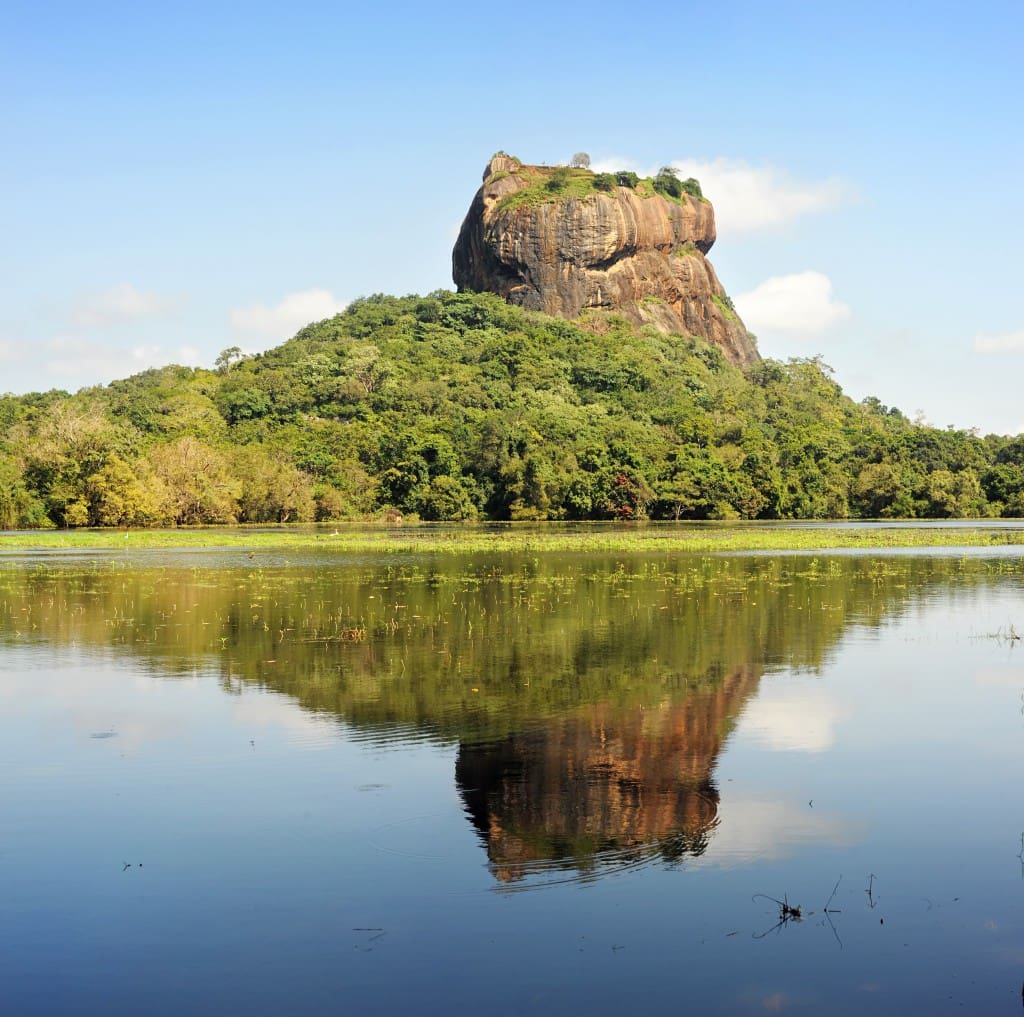
Touch down in Sri Lanka and start your journey in coastal Colombo. Cruise along the Madu River to Cinnamon Island, wander the UNESCO-listed ramparts of Galle Fort, and enjoy a thrilling wildlife safari in Yala National Park. Ride through the lush tea highlands of Haputale and Nuwara Eliya, visiting tea factories and waterfalls. Discover Kandy’s cultural heart and the famed Temple of the Tooth before heading north to the sacred caves of Dambulla and the towering rock citadel of Sigiriya. Encounter wild elephants in Minneriya National Park and explore the ancient capital of Polonnaruwa before ending your adventure on the laid-back shores of Negombo.
With expertly curated experiences, boutique stays, local guides, and unforgettable highlights, this immersive tour is your gateway to the soul of India and Sri Lanka.
Short Itinerary (With Flights)
Trip Highlights
Key moments at a glance
-
Cultural adventure through India and Sri Lanka
-
Marvel at the Taj Mahal and climb Sigiriya Rock Fortress
-
Experience heritage cities like Delhi, Jaipur, and Kandy
-
Explore tea plantations, temples, and ancient cave shrines
-
Enjoy safaris in Yala and Minneriya National Parks
-
Stay in hand-picked hotels with daily breakfast
WHAT'S INCLUDED
-
International return flights from NEW YORK
-
Internal flights between Delhi and Colombo
-
19 nights’ handpicked accommodation in handpicked hotels, heritage stays & scenic resorts
-
Daily breakfast throughout the journey
-
All airport transfers and ground transportation in air-conditioned vehicles
-
High-speed train ride from Haputale to Nanuoya for a scenic rail journey through Sri Lanka’s tea country
-
Wildlife safaris in Yala and Minneriya National Parks with expert trackers
-
All guided sightseeing including the Taj Mahal, Jaipur’s Amber Fort, Sigiriya Rock, Polonnaruwa ruins, and Galle Fort
-
Boat cruise on Madu River and cultural performance in Kandy
-
Entrance fees to all listed monuments, parks, and UNESCO sites
-
Services of English-speaking local guides and an experienced tour leader
-
ATOL protection, giving you complete peace of mind from the moment you book
Note: Any optional excursions mentioned in the itinerary are not included and are payable separately unless expressly stated as included.
WHAT'S NOT INCLUDED
-
Visa fees for India and Sri Lanka – please arrange prior to travel
-
Meals not specified in the itinerary
-
Optional excursions and activities not mentioned as included
-
Travel insurance – strongly recommended for all travellers
-
Tips for guides, drivers, and hotel staff
-
Personal expenses such as drinks, laundry, and shopping
ACCOMMODATION
We carefully select a diverse range of accommodations to enhance your travel experience, ensuring comfort, convenience, and cultural immersion. From vibrant city hotels to serene retreats by the mountains, each property is chosen to reflect the unique character of its destination. Whether you’re staying in a stylish hotel in the heart of Delhi, enjoying lakeside views in Udaipur, or gazing out at misty tea hills in Haputale, your accommodation will always complement the spirit of your journey. Below are some examples of the hotels you may stay in during this tour. If the listed properties are unavailable, an alternate accommodation of the same quality will be provided.
| Place | Accommodation | Description |
|---|---|---|
| Delhi | Park Inn by Radisson | Modern hotel offering comfort and great city access, close to major sights. |
| Agra | Royal Sarovar Portico | Contemporary stay just minutes from the Taj Mahal, with elegant amenities. |
| Jaipur | Ramada by Wyndham Jaisinghpura | Tranquil resort with pool, ideal for relaxing after exploring the Pink City. |
| Udaipur | Jaiwana Haveli | Charming lakeside haveli with traditional decor and rooftop views. |
| Colombo | Pegasus Reef | Beachfront property with modern facilities and peaceful ocean ambiance. |
| Kalutara | Tangerine Beach Hotel | Tropical beachfront retreat with garden views and large pool. |
| Kataragama | Mandara Rosen | Comfortable resort nestled near Yala, perfect for safari relaxation. |
| Haputale | Olympus Plaza Hotel | Well-situated hilltop hotel offering sweeping views of tea country. |
| Kandy | Thilanka Kandy | Scenic hillside hotel with easy access to the Temple of the Tooth. |
| Sigiriya | Amaara Forest Hotel | Nature retreat offering tranquil forest views near Sigiriya Rock Fortress. |
| Negombo | Goldi Sands Hotel | Laid-back beachfront hotel close to restaurants and Negombo’s sights. |
Please note: If the listed properties are unavailable at time of booking, equivalent accommodations of the same standard will be confirmed.
If the listed hotels are unavailable, we will provide alternative accommodation of a similar standard and style.
DATES & PRICES
Choose your preferred departure date and airport to see live prices and availability.
Secure your preferred departure
Popular dates fill quickly, and prices may vary with availability.
Book now, pay in stages
Secure your holiday with a 60% deposit and pay the remaining 40% three months before departure. Full payment is required for departures within 90 days.
Prices are per person, based on at least two people sharing a twin or double room.
Travelling alone? Visit our Solo Traveller page.
All Upcoming Departures (43 available)
Important Information
- Prices are per person, based on at least two people sharing a twin or double room, and include all the services listed in What's Included.
- If you are travelling alone, a single supplement applies. For our dedicated solo departures and special offers, please visit our Solo Traveller options.
- Secure your holiday with a 60% deposit and pay the remaining 40% three months before departure. Full payment is required for departures within 90 days.
- You can amend your booking up to 180 days before departure for a fee, subject to our Terms & Conditions.
- Financial Protection: Eligible non-flight packages and packages with flights departing from and returning to airports outside the UK are protected through ABTOT membership 5338. Packages with flights departing from or returning to a UK airport are protected under ATOL 7375. View protection details.
- All holidays are subject to operational changes and our full Terms & Conditions.
- Private departures on any day all around the year can be arranged for this tour. For custom dates and arrangements, email sales@lumle.com or call 1-888-214-4856.
Travel Information
Essential information for your India holiday. Content is tailored to your selected market.
Best time to visit
The best time to visit India is October to March, with cooler temperatures ideal for exploring Rajasthan, Kerala, and the Golden Triangle. April marks the start of summer, while September brings pleasant weather as the monsoon fades. Summer (May–June) can be very hot, and monsoon season (July–August) brings heavy rainfall to many regions.
Flight time
Approximately 15–18 hours to Delhi. Direct flights are available from cities like New York, Newark, Chicago, San Francisco, and Washington D.C. One-stop or two-stop options are also available via Abu Dhabi, Dubai, Zurich, or Helsinki.
Recommended airlines
Direct and one-stop options include Air India, United, Emirates, Etihad, and Finnair. Our packages include one-stop flights, with direct and preferred airline options available at an extra cost.
Visa & entry requirements
US citizens require a tourist visa to enter India, which must be obtained before travel via e-Visa or regular application. Entry requirements are subject to change, so travellers should check with the Indian Embassy or official sources before departure. It is your responsibility to check and meet entry requirements before travel.
Time difference
GMT +5 ½ hours (India is 10 hours 30 minutes ahead of New York during standard time and 9 hours 30 minutes ahead during daylight saving time)
FREQUENTLY ASKED QUESTIONS
Got questions? We've got answers.
Browse by topic
Find FAQs by category to quickly get the information you need.
Popular questions
Quick answers to the questions we’re asked most often.
How much deposit do I need to pay?
Secure your holiday with a 60% deposit and pay the remaining 40% three months before departure. Full payment is required for departures within 90 days.
When is my final balance due?
Secure your holiday with a 60% deposit and pay the remaining 40% three months before departure. Full payment is required for departures within 90 days.
When will I receive my travel documents?
Your comprehensive travel pack, including e-tickets, final day-by-day itinerary, hotel contact details, and practical destination advice, will be emailed to you approximately 2 to 3 weeks before you travel.
Are international flights included?
Select a package with flights to include the flights shown in your chosen departure. Routes, baggage allowances and inclusions depend on the itinerary and departure airport; check your booking details before confirming.
Do I need travel insurance?
Yes, comprehensive travel insurance is mandatory for all our holidays. You must ensure your policy covers all activities you plan to undertake, as well as medical emergencies, repatriation, luggage, and trip cancellation.
What happens if I need to change my booking?
We understand plans change. You can amend your booking up to a certain period before departure. Amendment fees may apply depending on the changes and airline ticket conditions. Please contact our team as soon as possible.
What is your cancellation policy?
Cancellations must be made in writing. Cancellation charges apply and increase the closer it gets to the departure date. Please refer to our full Terms & Conditions for the specific cancellation fee scale.
Can I arrange my own flights (Land Only)?
Yes. If you prefer to arrange your own international flights, please contact our travel specialists and we will be delighted to provide a tailor-made land-only quote for your travel dates.
All FAQs
Browse all questions and answers by category.
Booking your holiday 1
How much deposit do I need to pay?
Secure your holiday with a 60% deposit and pay the remaining 40% three months before departure. Full payment is required for departures within 90 days.
Payments 1
When is my final balance due?
Secure your holiday with a 60% deposit and pay the remaining 40% three months before departure. Full payment is required for departures within 90 days.
Flights & travel 2
Are international flights included?
Select a package with flights to include the flights shown in your chosen departure. Routes, baggage allowances and inclusions depend on the itinerary and departure airport; check your booking details before confirming.
Can I arrange my own flights (Land Only)?
Yes. If you prefer to arrange your own international flights, please contact our travel specialists and we will be delighted to provide a tailor-made land-only quote for your travel dates.
Passports & visas 2
Do I need a visa to enter Sri Lanka?
Yes, you will need a visa to enter Sri Lanka. In addition, if you intend visiting Sri Lanka on a short visit,you will need to obtain an Electronic Travel Authorization (ETA) prior to arrival.
The Electronic Travel Authorization (ETA) is an official authorization for a Short Visit to Sri Lanka and is issued through an on-line system. You need to obtain an ETA if you intend visiting Sri Lanka as a Tourist, on Business or on Transit. No passport copies, documents or photographs are required to obtain the ETA. ETA holders will be issued a 30 day Short Visit visa at the port of entry in Sri Lanka.
Am I required to obtain an ETA?
Nationals of all countries with the exception of citizens of countries mentioned below are required to obtain an ETA to visit Sri Lanka.
Nationals of following countries who visit Sri Lanka for a Short visit up to 30 days are exempt from obtaining an ETA;
- (i) The Republic of Singapore
- (ii) The Republic of Maldives
- (iii) The Republic of Seychelles
How much does the ETA cost?
The non-refundable ETA processing fee for a Tourist visa with Double Entry for 30 days for citizens of South Asian Association for Regional Cooperation (SAARC) countries will cost US$ 15, all other countries will cost US$ 30. Children below 12 years of age are exempt from the ETA fee.
A complete list of ETA processing fees could be obtained from the ETA website.
How do I apply for the ETA?
You can submit the ETA application online through the ETA website. Select the language, click ‘Apply’ and follow the instructions.
Other options for you to apply are;
- (i) By Third party
- (ii) By Registered agents
- (iii) At Sri Lanka Overseas Missions
- (iv) At the head office of the Department of Immigration and Emigration (DI&E), Colombo
- (v) On arrival at the port of entry in Sri Lanka
Answers to FAQ’s on the ETA can be found at the official web site,
My holiday is over 30 days, how can I obtain an extension to my visa?
You can either apply and obtain an extended visa from a Sri Lankan Embassy/ Consulate from your country of residence prior to arrival in Sri Lanka or get an extension from the Department of Immigration and Emigration in Colombo 10. This procedure will take about 2-3 hours, and you will have to give a bona fide reason for staying over 30 days. If you are staying in a resort for a long period, the staff will be able to help you with the application.
Do you need a visa?
You need a visa to travel to India unless you are an Overseas Citizen of India (OCI) cardholder. India has several visa categories. Make sure you get the right visa for the purpose and duration of your travel. Penalties for having the wrong visa can include refusal of entry or deportation.
For more accurate and up-to-date visa information on India please visit https://indianvisaonline.gov.in/evisa/tvoa.html
Before you travel 5
What vaccinations do I need for India?
Courses or boosters usually advised: Diphtheria; Hepatitis A; Tetanus; Typhoid. Other vaccines to consider: Hepatitis B; Rabies. Selectively advised vaccines – only for those individuals at highest risk: Cholera; Japanese Encephalitis.
For more accurate and up to date information please visit:
https://www.fitfortravel.nhs.uk/destinations/asia-east/india#:~:text=Courses%20or%20boosters%20usually%20advised,risk%3A%20Cholera%3B%20Japanese%20Encephalitis.
https://healthclinics.superdrug.com/travel-vaccinations/india/
Do I need any vaccinations ahead of Sri Lanka travel?
Infact, vaccination requirements vary for one country to another. Although we are able to give you advice, we are not medical professionals and are not able to give you specific advice on medical matters. We strongly recommend that you consult with your GP or travel clinic and seek professional advice before you travel. It may be helpful, if you take a copy of your holiday itinerary with you during your appointment. For more details please visit https://www.gov.uk/government/organisations/department-of-health
Do I need any vaccinations ahead of travel?
Infact, vaccination requirements vary for one country to another. Although we are able to give you advice, we are not medical professionals and are not able to give you specific advice on medical matters. We strongly recommend that you consult with your GP or travel clinic and seek professional advice before you travel. It may be helpful, if you take a copy of your holiday itinerary with you during your appointment. For more details please visit https://www.gov.uk/government/organisations/department-of-health
Courses or boosters usually advised: Diphtheria; Hepatitis A; Tetanus; Typhoid. Other vaccines to consider: Hepatitis B; Rabies. Selectively advised vaccines – only for those individuals at highest risk: Cholera; Japanese Encephalitis.
For more accurate and up to date information please visit:
https://healthclinics.superdrug.com/travel-vaccinations/india/
When will I receive my travel documents?
Your comprehensive travel pack, including e-tickets, final day-by-day itinerary, hotel contact details, and practical destination advice, will be emailed to you approximately 2 to 3 weeks before you travel.
Do I need travel insurance?
Yes, comprehensive travel insurance is mandatory for all our holidays. You must ensure your policy covers all activities you plan to undertake, as well as medical emergencies, repatriation, luggage, and trip cancellation.
On your holiday 44
Any advice on shopping in Sri Lanka?
Sri Lanka has a wide variety of very attractive handicrafts on sale. Sri Lankan masks are a very popular collector’s item. Other recommendations are batiks, wood carvings, gemstones, semi-precious stones, lacquer-ware, hand-made Silver- and Brass objects, and don’t forget the famous ‘Ceylon Tea’. Please avoid ornaments made from tortoise shells & ivory. Never buy turtle shells, we even suggest you not purchase any woodcarving made from ebony, to preserve this scarce hardwood.
Sri Lanka is a major garment manufacturer and exporter of all kinds of clothing. There is an excellent selection of children’s and casual clothing for men & women, beach wear, and even warm padded jackets at extremely attractive prices. Colombo is fast becoming an attraction for garment hunters.
Are there any areas in Sri Lanka that I cannot travel to?
You may travel to anywhere in the island. However, travel to the North requires prior authorization from the Ministry of Defence. We do not conduct tours to the Northern province at present.
Can I process my digital photos in Sri Lanka?
There are many franchised photo shops such as Kodak & Fuji with advanced digital imaging services in major towns. Almost all types of digital data storage devices are accepted. It’s always advisable to keep a backup of your pictures before handing them over for processing.
It’s always advisable to bring a USB cord (camera to PC) so you transfer the pictures to a PC. The internet cafés are ideal for this (you’ll find them all around the country). Simply copy the pictures to the PC and then burn them into a CD. This is much cheaper than processing through a photography shop/ studio. It’s best to make two copies of the CD. One you keep with you, the other send it home in the post. That way you can always keep your memory cards empty to capture more photos!
Digital camera accessories such as memory cards and batteries are available in Colombo, Kandy, and a few major towns.
Can I use my cellphone in India?
You can purchase a SIM card in India, but we suggest you check with your cellular provider to know what your options are. You might be able to get an affordable roaming plan.
How is the nightlife in Sri Lanka?
The places with some active nightlife are Colombo, Negombo and Hikkaduwa.
Colombo has some decent pubs, nightclubs, karaoke lounges and bars. There is a growing pub culture among the young crowd in Colombo. Friday and Saturday nights are the days for all-night partying. The casinos offer a good combination of live entertainment, food, and games of chance.
Negombo and Hikkaduwa have some good beach restaurants and bars. Negombo doesn’t have much of a party scene, but you will find regular beach parties in Hikkaduwa.
How long does it take to fly to India from the UK?
With one stopover (of approximately up to 6 hours) the total duration of the flight is approximately 14 hours whereas direct flight takes around 9 hours.
How much should I tip in India?
It is usual to tip the waiters, porters, guides, and drivers. Tips are not included in the bills of hotels, transport companies, or any other suppliers. At hotels and restaurants, about 10% of the bill total is usually acceptable as a tip. For establishments that have a service tax or charge included in the bill, a separate tip may not be required.
Drivers/Guides: Rs. 1000 per full day
Porters: Rs. 100 per piece of luggage
Reps at Airports: Rs. 200 per service
Helper in vehicle: Rs. 200 per day
How welcoming is India to LGBTQ travellers?
The majority of the country is safe for LGBTQ travelers and families. The country does hold somewhat conservative values, so public displays of affection between gay or straight couples are not common.
How welcoming is Sri Lanka to LGBTQ travellers and families?
Due to the country’s conservative and traditional beliefs, we advise LGBTQ travellers to be discreet.
Is English spoken throughout Sri Lanka?
English is fairly widely spoken throughout Sri Lanka, however, we advise Lumle guests not to assume that everyone can speak the language.
Is India a family-friendly destination?
India offers many family-oriented activities including visits to forts and palaces, tiger and leopard safaris, beaches, and museums. We can create a custom itinerary based on your family’s interests.
Is Rupee the only currency used or is the US$ or Euro also widely used Sri Lanka?
The Sri Lankan Rupee is used only for transactions within Sri Lanka.
US$/Euro etc., is accepted in most large hotels, and tourist establishments, but not in outlets catering to locals. Advice to bring in US$/Euro and change as and when needed.
If the Rupee only is used – what is the best currency to bring – US$ / £ Sterling / Euro?
It depends on your primary account currency.
If your account is in Singapore Dollars, bring that (or you’ll lose on converting to a third currency).
You can change the currency to Rupees on arrival at the airport. However, if your currency is a non-freely convertible local currency (not freely traded in international foreign exchange markets) it’s better to bring a freely convertible currency like the US$/ Euro. There are many currency exchange counters at the arrival lounge (after passing baggage clearance and customs).
Internationally accepted currencies and credit cards are easily accepted at most tourist establishments. Travelers cheques are also recommended. We recommend you change some of your money into local currency for tipping, shopping and other miscellaneous expenses.
The exchange of foreign currency is only permitted at banks, money changes and Hotels. You’ll have no problem changing Travelers Cheques at any major bank. Thomas Cook and Visa are the most widely accepted. Banks charge a 0.5% handling fee and generally a commission, which varies from bank to bank. Change only that amount of money you require for spending.
How much of money can I bring in to/ take out of the country?
There is no restriction in bringing money in foreign currencies into Sri Lanka. This sum could be in TCs, Bank drafts or currency notes. However, if the total exceeds US$ 15,000, that sum must be declared to the Sri Lanka Customs.
If you wish to take out from Sri Lanka a sum in excess of US$ 5000 in currency notes (out of the money brought in), you must declare the entirety of the sum brought in, even if it is less than US$ 15,000.
The foreign currency amounts indicated in US$ may be in equivalent amounts in other convertible foreign currencies.
Please retain whatever receipts of exchange (including ATM receipts) for monies declared. This will be helpful when re-exchanging to foreign currency and taking your money back out of the country. The Re-Exchange (purchase of foreign currency) can only take place on your departure at the Bank counters at the airport. Do note that they will only accept bank receipts (not Money Changer receipts).
Are credit cards widely accepted?
Credit Cards are widely used and accepted by local establishments (even in small towns). The most widely used card types are Visa and MasterCard, with Amex to a lesser extent. It would be a convenient option to use your Credit Card (valid for international use) whenever possible.
Due to currency regulations in Sri Lanka, credit card charges cannot be made in foreign currency Local tourist establishments (including Dream Vacations) will apply the daily exchange rate on the day of your payment and convert foreign exchange rate to Sri Lankan Rupees. Please use the exchange rate indicated in the currency converter only as a guideline as we will apply the prevailing bank exchange rate at time of transaction.
Are ATM machines widely available and do they issue cash against my debit/ credit card?
ATM’s are available in most main cities. You can take cash against Visa / Mastercard in most ATM’S. However, as different banks accept different cards, we advice you ensure that your card is valid for use in Sri Lanka by contacting your bank. Watch out for the Maestro or Cirrus logo!
What are the business hours and days?
| Institution | Hours | Open Days | Closed |
| Banks | 09:00 – 15:00 | Mon – Fri (some open Sat morning) | Sundays, Poya Days* |
| Government Offices | 09:30 – 17:00 | Mon – Fri (some open Sat morning) | Sundays, Poya Days |
| Shops | 10:00 – 19:00 | Mon – Fri (most open Sat morning) | (Some open Sun morning), Poya Days |
| Post Offices | 10:00 – 17:00 | Mon – Fri (Sat morning) | Sundays, Poya Days |
*Poya days (Full moon days)
Is Sri Lanka a family-friendly destination and safe to travel?
Sri Lanka is family-friendly and considered to be very safe. There are a lot of activities for families such as elephant and leopard safaris in the national parks, visiting pristine beaches, or exploring cultural sites. Our holidays are conducted in areas which are considered safe for tourists to visit.
What safety precautions must I take when travelling?
According to accepted norms of travel you should deposit your valuables like money, passport, tickets, jewels etc in the hotel safe deposit locker. In accordance with international custom the Hotels in Sri Lanka are not responsible for objects lost in the room. You should also not leave your valuables unattended on the beach, the balconies or terraces.
Never leave your money or passport in your backpack or suitcase. Always keep a record of your Travellers Cheque numbers separately from the Travellers Cheques. It is wise to keep an amount of money (about US$ 200) stashed away separately from your money-belt or pouch.
What health issues must I be concerned with?
Sri Lanka has an effective health care system which is considered a model for most developing countries across the world. However, emergency medical facilities may not be found outside main cities. You may have to be brought to Colombo for treatment. We recommend you use the private sector hospitals, which are likely to offer better care.
It is mandatory for those travelling to Sri Lanka from Africa or Latin America to have a valid certificate of vaccination for Yellow fever and Meningitis prior to arrival in Sri Lanka. You need up-to-date Hepatitis A, Polio and Tetanus shots.
Mosquito borne diseases like dengue, chckengunya and malaria are common. It’s advised you take adequate protection against mosquitos. Take some Imodium tablets (just in case you get an upset stomach).
Almost every town has a pharmacy selling common medicines. However, we advise you to carry any special medication as the availability of medical supplies may vary. You are strongly advised you take an adequate health insurance cover when travelling to Sri Lanka.
How about mosquitoes and other pests?
Most hotels will provide you with a plug-in mosquito repellent which will usually be switched on during turn down. You can buy the mats (small repellent tablet inserted to the plug-in unit), from most local supermarkets. Mosquito nets in hotels are a rarity. You can also buy the burning coils or citronella candles from the supermarket. It would be advisable to apply some repellent lotion if you plan to have dinner in an outdoor/ alfresco setting. The locally available ‘Siddhalepa balm’ is quite effective to take the itch out of mosquito bites.
Leeches – A good remedy is to apply soap and left to dry or apply lime to exposed areas. You can wear leech socks. Which are pulled over the trousers to prevent leeches reaching the exposed skin of the legs. If you find a leech sucking on your leg, do not pull it off, but wait for it to fall off after feeding. Else you can apply some salt; this will make the leech release its hold and fall off.
Is tipping accepted and how do I tip in Sri Lanka?
Tipping is widely accepted and generally expected. tipping is a customary way of showing your appreciation for services rendered. A general rule of thumb for tipping;
Tour Guide – Your chauffeur-guide will expect something between US$ 10 to 15 a day (depending on your level of satisfaction with his service). If you are in a tour group of more than 7 people (and tour of more than 6 days), you can pool the tip and pay the guide $65 – $ 80, Driver $55 – $75, Driver’s assistant $35 – $45 for the tour.
Restaurant Staff – A 10% service charge is usually included in bills for food in more established restaurants. However the waiter/ waitress will expect a small tip. If a 10% service charge is included in the bill, a tip of $1 or $2 will be sufficient. If you receive exceptional service, add another 5% – 10%. If you are staying at a high-end hotel with a personal butler, tip him about $10 per day.
Housekeeping, bell desk & maintenance staff – A tip of $0.50 cents or $2 for the porter/ bell boy per bag (depending on distance to your room). Airport porters usually have the rate marked on their vests – about Rs. 50 per bag – this is not really a tip but more like a ‘service charge’. The room boy/ maid & pool boy will expect about $4 – $5 per week.
Temples & places of interest – The man who looks after your shoes at temples will require a small tip. The resident monks in some smaller temples will show you around and expect a ‘donation’ – in such cases you can buy a ‘ticket’ from a layperson or place the tip in the ‘donation box’. If you visit Pinnawela Elephant Orphanage and want to take photo or bottle feed a baby elephant – you’ll need to cough up a ‘tip’. Always check with your guide before snapping a picture.
Transport – taxi cabs & tuk tuks run on a fixed price, so tipping is not required.
A 1 US$ is roughly equal to Rs. 150, so giving this as a tip is also well received by the locals. Don’t get overwhelmed by all the tipping advice, after all it’s purely discretionary.
Is Wi-Fi readily available in Sri Lanka?
Internet access is good in most major areas of Sri Lanka. Wi-Fi is available at most restaurants, bars, cafes, hotels, and malls, although you’ll find gaps in service in remote areas and villages.
Is Wi-Fi readily available?
Internet access is good in most major areas of India. Wi-Fi is available at most restaurants, bars, cafes, hotels, and malls. However, poor internet service does exist in remote areas and villages in India. Most hotels charge for Wi-Fi services.
What are the best ways to travel around in India?
The best way to cover the places is to get a private driver for intercity transfer and sightseeing, you may opt for internal flights for longer trips. For a different experience, you may consider embarking on a train journey for a taste of the railway network in India.
What are the dos and don’ts when interacting with locals in Sri Lanka?
The Right Hand rule – Always gives and receives and eats with your right hand. It is extremely bad mannered to use your left hand for eating.
Respect cultural differences – Things are done differently in Asia, and Sri Lanka is no exception. This is why we love it! Please make sure in your dealings with local people you accept these differences and not try to change them for your own benefit or comfort. The traveler who wishes to have a happy and successful trip in Sri Lanka should keep as calm, cheerful and friendly as humanly possible. Patience and courtesy are virtues that open many doors. Demanding tourists do not get smiles, service or respect.
Environmental responsibility – Pollution and waste management is a huge problem throughout the world. Unfortunately in many parts of Asia, disposal systems are inadequate and recycling of plastics is limited. We suggest avoiding plastic packaging where possible and take along your own bag when shopping. Plastic bags will be offered for everything! Collect and dispose in the next town.
The law protects certain endangered species of flora & fauna. Export & in even possession of these species as well as of wild animals, birds, reptiles etc., is illegal. The production and sale of items made from wild animals and reptiles, e.g.: Leopard skins, crocodile skins, elephant tusks etc., is also illegal.
Never break coral, or brush against it. Coral is basically a colony of living organisms and damaging them, might kill them. If you go out in a Glass-bottom Boat, encourage the pilot to steer well clear from the coral itself. Boats scraping over the top of the reef are doing damage especially at Hikkaduwa. Never buy coral if it’s offered for sale. Similarly don’t buy sea shells or turtle shells (or eggs). All of Sri Lanka’s five species of Turtle are endangered. If you happen to spot a turtle, when being take out on a boat, discourage the driver from circling it; this sort of harassment is very stressful to the turtle.
What are the do’s and don’t of local photography?
Ask permission before taking photographs of people and respect their wishes if they refuse. Minority groups in particular are often unhappy to have their photo taken. Travellers should avoid paying for the right to take a photo as this has been found to encourage a begging mentality in the locals. If photos are taken please send back copies (through our tour leaders or direct to the village) so that the people receive copies. The locals gain a great buzz from seeing themselves in photos and it encourages a ‘sharing’ rather than ‘taking’ attitude towards photography. Our tour leaders will make every effort to distribute them the next time they are in the area.
While we welcome travellers to pack their video cameras, there are some places where we do not allow you to film. In small villages, at home-stays or trekking, we do not permit the use of videos as local people have requested this and we ask for courtesy and discretion with still cameras.
Ask permission before taking pictures either of people or inside temples or other sacred places. For example, it is forbidden to take photographs inside the cave temple complex of Dambulla. Never use flash on murals inside temples and other places; it can damage them. You are not allowed to use flash at the frescoes at Sigiriya, but where there is no ban, please behave responsibly.
Never pose beside or in front of a Buddha statue (i.e. with your back to the statue). Such conduct is considered extremely disrespectful. Never take a photo of a monk without asking permission. Tourists are sometimes asked for money for taking photos. Always ask before you shoot whether payment is expected. Our accompanying representatives will be able to guide you on this.
Never take photos of dams, airports, roadblocks or anything to do with the military. Don’t tote the camera around Colombo Fort.
What are the main annual festivals or events held?
India has many festivals and events, but two of the biggest celebrations are Dussehra, Diwali and Holi. Dussehra and Diwali is the Hindu Festival of Lights celebrated annually for five days in either October or November. Holi is the Hindu Festival of Colours, celebrated annually in March after the full moon.
What are the public bathroom facilities like in India?
There are two types of toilets in India:
1) Western sit-down toilets
2) Asian squat toilets. Squat toilets are the most common in public bathrooms. Some public bathrooms will not provide toilet paper or soap, so we recommend you bring your tissues and hand sanitizer.
What can I experience in India?
India is a big and diverse country so what you experience depends on what part of the country you are covering. One of the most popular and landmark sights is the Taj Mahal. Located in the famous India’s Golden Triangle, Agra’s world-renowned mausoleum is an epic sight during sunrise. Close to Agra, you can also embark on a jungle safari in Ranthambore National Park or explore the colourful bazaars of Jaipur. Down in the South backwaters of Kerala may appeal to you for a tranquil experience.
What festivals/public holidays are celebrated in Sri Lanka?
Tamil Thai Pongal Day takes place in January, usually on January 14. The National holiday takes place on February 4. Sinhala and Tamil New Year’s Eve is in April each year, typically April 13 or April 14, while New Year’s Day is usually April 14 or April 15.
What food and drink should I try in India?
India is a diverse country, every region and culture is blessed with their unique cuisine so what you eat and drink will vary depending on where you visit. But, there are a few things that you will find everywhere no matter where you go. For example, thali are traditional meals made of different curries and lentils with traditional accompaniments served in small bowls and arranged attractively on a large tray. A few of the dishes may vary as per the region. India is heaven for street food lovers as you can find a huge range everywhere from big cities to small villages which you may consider while having a stroll through the streets. Another sight you cannot miss is small tea stalls, chaiwallahs selling masala milk tea. For more in-depth knowledge why not jump into culinary experience?
What is food like in Sri Lanka?
Sri Lankan dishes are based on rice, with a large variety of vegetables, fish & fruits. The uniqueness of Sri Lankan food influenced by invaders and traders – Indians, Arabs, Malays, Moors, Portuguese, Dutch and English all whom have left a mark on the Sri Lankan diet, will surely make your trip a voyage of culinary discovery!
Sri Lankan food is good, perhaps a little too piquant for foreign palates, but worth trying. The Lankan food served in your hotel is toned down a little bit due to the sensitive stomach of most tourists, but nevertheless is delicious and you should try it. International food of any kind is found in all major Sri Lankan Restaurants.
Most coastal towns have excellent seafood including prawns & delicious crab. Rates are quite inexpensive. Being a tropical country, Sri Lanka is blessed with a large variety of fruits. Some fruits like mangoes and Bananas (known an plantains here), come in over a dozen of sub varieties of shapes, sizes & tastes! Fruits such as Rambutan, Pineapple, Mangosteen, Papaya (Papaw), wood apple, melons, passion fruit, guavas, etc., are but a small sample of the amazing variety of fruits to be discovered and enjoyed.
Can I obtain vegetarian food?
Most large hotels and restaurants have a ‘vegetarian section’ in the menu.
The smaller local ‘rice and curry’ restaurants may say the food is vegetarian but include a serving of fried fish or sprats (anchovies). The ‘South Indian’ vegetarian restaurants are 100% vegetarian.
Can I obtain ‘Halal’ food?
‘Halal’ food is quite scarce in major hotels. The Galadari and Holiday Inn in Colombo serve halal food, as well a couple of hotels on the west coast. There are quite a few restaurants in Colombo and Kandy, but not much else. The best bet is to order seafood instead of meat to be on the safe side.
What sort of food can I expect in an ‘Ayurveda Resort’?
The food is exclusively based on Sri Lankan rice and curry menu. The curries are mostly Sri Lankan vegetables; Chicken and fish maybe included.
How about drinks?
Sri Lanka is famous for it’s tea, and pride ourselves in producing ‘Ceylon Tea’, the finest tea in the world. There is a local version of coffee, which is a bit strong. But Colombo is the only place that you could get a really good espresso. Highly recommended are the fresh fruit juices. Popular international soft drinks are available even in little village boutiques.
Sri Lanka has it’s own variety of local beer. Sri Lanka also has two extremely popular local varieties of intoxicating beverage – Toddy and Arrack. Toddy is a natural drink, produced from one or other palm trees. Fermented and refined toddy becomes Arrack. Some varieties are real “rocket fuel”! Imported beer and foreign liquors cost almost the same as in most western countries.
Thambili or King Coconut is a sweet, clean and cheap natural drink that you’ll find by the wayside. It’s extremely cooling and refreshing!
We advice not to drink tap water unless it is purified. Bottled water is recommended. Only use water from containers with serrated seal- not tops or corks. Most hotel rooms have boiled water in thermos flasks, which is safe to drink.
Is it true that liquor is not served on Full Moon days?
True. Liquor is not served on Full Moon Days.
Full Moon days (known as Poya days), are of religious significance to Buddhists and devoted to prayer and meditation. In keeping with its significance as a religious day abstinence is practiced. As such places selling liquor (including hotel bars) and Meat shops closed. Places of entertainment such as cinemas, discos and casinos are closed as well.
Can I smoke in public places?
No. Smoking and consuming liquor in public areas is banned in Sri Lanka. The smoking ban includes enclosed public places such as restaurants and social clubs. Smoking is not allowed inside Dream Vacations vehicles while on tour; however, regular comfort stops will be provided.
What sort of accommodation can I expect?
Accommodation is usually in a shared twin-bed room with a supplementary charge for single occupancy. We offer a wide range of accommodation from private boutique hotels, villas, eco lodge and tents. Some of our nature & adventure trips include traveling to remote or undeveloped outstation destinations, hotel accommodation of International tourist standard may not exist & facilities are rudimentary. Sleeping huts & tents are simple & often lack Western-style toilets or bathing facilities. In such places, tour participants will be provided with the best available facilities. The package price may include meals as specified in each tour program.
What is the currency used in India?
The currency used throughout the country is the Indian rupee. Most vendors will also accept Mastercard or Visa. ATMs are commonplace in India.
What is the official language of Sri Lanka?
The official languages of Sri Lanka are Sinhala and Tamil.
What is the option of transportation within Sri Lanka?
Since Sri Lanka is a small country, driving is the best way to get to most regions. Lumle guests will travel by private vehicle or bus if taking a group tour. To travel from Kandy to the tea plantation area, it is common to take the express train (permitted operational).
What is the voltage type in Sri Lanka?
The voltage is Sri Lanka is 220/ 240 volts
What type of plug/s can I use?
Sri Lankan hotels have two types of plug bases; either the UK (Type G) or India (Type D).
| Plug type | Pins | Amps | Plug base compatibility |
| UK (Type G) | 3 rectangular pins | 13 Amps | Accepts Type C (by tricking Earth socket). Need an adapter to accept Type D |
| Euro plug (Type C) | 2 round pins | 5 Amps | Compatible with Type G and Type D (by tricking Earth socket). |
| India (Type D) | 3 round pins* | 5 Amps | Accepts Type C (by tricking Earth socket). Need an adapter to accept Type G |
*Do not confuse with the larger 15 Amp plug which is used for ‘heavy duty’ appliances like air-conditioners, and microwave ovens.
If you have a rectangular plug (UK – Type G) and the hotel base is round pin (India – Type D) or vice versa, just ask the reception to send you an adapter, which will solve the problem. Alternately, adapters are freely available in supermarkets/ hardware shops.
If you have a Euro plug (Type C), you can stick a pen into the Earth socket (either UK Type G or India Type D) to open the shutters and insert the plug; Do not forget to switch off the power before you do this!
The Type I plug (two slanted pins) used in countries such as South Africa, Australia, New Zealand and parts of China is not compatible with Sri Lankan plug base and need an adapter. Its better you bring a ‘Universal Adapter’ if you have this type of plug, as it will be difficult to find adapters for Type I plugs in the local hardware shops.
A word of caution; do not insert a 110V – 120V appliance (E.g. hairdryer) into a Sri Lankan 240V plug base, you might find it catching fire in your hands!
What language is spoken in India?
The official language is Hindi which is spoken by about 30% of the population, but English is widely spoken in metro cities and tourist areas. In addition, there are more than 100 other regional languages and dialects, including Punjabi, Bengali, Gujarati, and Oriya, which are widely used in the north, and Tamil and Telugu, which are common in the south. Other regional languages are Marathi, Kannada, and Malayalam. The northern Muslim population largely speaks Urdu.
What should I wear when visiting temples and mosques in India?
During your visit to holy places in India, you should wear clothes that cover your head, knees, and shoulders.
What's India’s time zone?
The time zone in India is GMT +5:30.
Where can I find the latest travel advice for India?
For the latest travel advice for India, including entry requirements, health information, and the safety and security situation, please refer to the https://www.gov.uk/foreign-travel-advice/india
Where can I see tigers in India?
In India, the best place to spot tigers is Central India, make your way to Kanha, Satpura, Pench, and Tadoba national parks. Scattered across the central states of Madhya Pradesh, Maharashtra, and Chhattisgarh, they’re home to the country’s greatest concentration of Bengal tigers. Additionally, you will likely see wildlife, like sloth bears, leopards, deer, and elephants, who all roam freely through the protected jungles. However, if you have Rajasthan in your itinerary, you may include Ranthambore National Park, rather than travel so far.
Where can I stay in India?
From lavish palaces to simple homestays, the type of accommodation in India depends on where you want to stay as India has a lot to offer meeting the budget of every kind. The big cities offer a huge range of accommodation ranging from five-star hotels and boutique guesthouses. Outside the cities, you may want to spend a night in a heritage property a remote lodge, or a safari camp in the middle of the jungle. During your exploration of the Golden Triangle, you can also choose to stay in a converted fort, a regal palace, or a historic family mansion known as a haveli. Further, in South India, you can immerse yourself into rural life with a homestay, known as Theravada, or a rice barge-cum-houseboat that glides along the sleepy backwaters. Our team of experts will be delighted to find you the accommodation that meets your requirements so come and explore with us!
Where should I go in India?
If it is your first time in India, we recommend visiting the famous Golden Triangle of Delhi, Agra, and Jaipur. Also, you can include Ranthambore National Park to explore the wildlife famous for tigers.
On a second visit, you might explore the Southern part of India-Tamil Nadu, where colorful temples strike your eyes. Here, you can visit the 49 shines of Ranganathaswamy Temple in Trichy, involved with local families during a cooking class in Pondicherry, and then finish your holiday on the backwaters of Kerala.
When is the best time to go to Sri Lanka?
If you’re visiting the west and the beaches on the south coast, the best time to travel is from December to March. The East Coast experiences a slightly different weather pattern, so the best time to visit is from April to September. If you plan to go to Yala National Park make sure you avoid September as the park is usually closed for conservation efforts.
How can I get to Sri Lanka from the UK?
You can get to Sri Lanka from the UK by flight. Flights to Sri Lanka from the UK take an average of 13 hours with a stopover. Sri Lankan Airlines flies direct to Colombo from London Heathrow in approximately 10 hours and 30 minutes.
What is the local currency and what currency should I take?
The currency used is the Sri Lankan rupee. For travel money, Lumle recommends taking US Dollar. Mastercard and Visa are widely used where credit cards are accepted as payment.
Can I use my mobile in Sri Lanka?
Lumle guests can buy a SIM card in Sri Lanka, but we suggest you check with your mobile service provider to know what your options are as you might be able to get an affordable international roaming plan with your current provider.
How are telephone facilities in the country
Telephone facilities are available extensively throughout the country. Telephone bureaus are quite common with most offering IDD and internet facilities. You could get assistance from our guide to purchase a data SIM for internet access. IDD facilities are available in most tourist hotels.
What is the country code and how do I dial area codes?
Dialling in – Sri Lanka’s country code is 94, (E.g. If you need to call a number in Colombo, dial +94 11 2XXXXXX). If you are calling a mobile number, you dial the number after the country code (E.g. dialling a Dialog number, dial +94 77X XXXXXX).
Dialling within/ out – If you need to take an overseas call, you’ll have to dial ’00’. You do not have to dial the area code if you are within the area. However, the area code must be dialled if you want to take an outstation call (e.g. calling within Colombo, dial 2XXXXXX, Calling Kandy from Colombo, dial 081 22XXXXX).
What mobile technology is supported in Sri Lanka?
All mobile operators support the GSM technology on GSM 900/ 1800 bands. WAP & GPRS is widely supported. 4G and wireless broadband is available in Colombo. Wifi zones are available in selected spots in major towns.
Can I purchase a local mobile connection while on holiday?
It’s a good option to purchase a local SIM card and top up cards while you are on holiday. The mobile call rates are relatively cheap for both local and IDD calls. There are many mobile operators in the country (E.g. Dialog, Mobitel, Etisalat, Hutch etc.,). Dialog has a counter at the Colombo Airport and you can obtain a connection on arrival. A Dialog connection will cost about Rupees 1500. Top up cards are freely available island-wide. You can buy top-up cards for denominations of Rupees 100, 400 & 1000. Be sure that your phone is `dual band’ and unlocked.
Can I access the internet freely?
Most hotels provide internet facilities. There are internet cafes in most towns with WIFI connection. Connections in smaller towns will be slow. The average cost of surfing in a Cyber Café is about US$ .50 per hour. Many large 5 star and some boutique hotels provide Wifi facilities.
Is it safe to drink the tap water?
No. The tap water is not considered as safe drinking water in Sri Lanka. It’s strongly recommended that you stick to bottled mineral water.
When is the best time to go?
India is a giant country has various climatic regions, what that means the best time to travel will depend on which part of India you are visiting? Generally, India’s weather is divided into three seasons – summer, winter and the monsoon. Typically, winter (November to February) is the preferred and considered as best time for many travellers to visit. The Himalayas and hill stations are best explored during the summer season (March to May). The monsoon season (June to August) brings rain. Although, this season does not stop you from travelling to India, you should be prepared to encounter rain and warm.
How can I get there?
India has very good flight connects from United Kingdom. There are numerous direct flights to India from the UK, although their frequency and the duration of the flight will depend on which of the country’s airports you are planning to fly into. There are direct flights from London to cities like Delhi and Mumbai serviced by Vistara, Virgin, Air India, and British Airways. Non-direct flights from the UK to other popular Indian cities, like Goa, Chennai, and Hyderabad are also available with a stopover in Delhi or Mumbai. Flight times vary between eight-and-a-half hours and 14 hours depending on which part of India you are visiting.
What is there to see and do?
Magical India has lots to offer to visitors. India’s attractions are varied and diverse, from its famous monuments and historical sites like the Taj Mahal, Delhi’s Red Fort, Mysore’s Maharaja’s Palace and the Jaisalmer Fort, to the stunning beaches in Goa and the wildlife reserves like Ranthambore where you can spot tigers and many other exotic creatures. The northern region of India where you can explore hill stations and enjoy the Himalayas whereas in the southern regions you can enjoy the sunshine on glorious beaches. Please visit “Places to visit India” and “Highlights of India” section in our website to explore more about India attractions.
Changes & cancellations 2
What happens if I need to change my booking?
We understand plans change. You can amend your booking up to a certain period before departure. Amendment fees may apply depending on the changes and airline ticket conditions. Please contact our team as soon as possible.
What is your cancellation policy?
Cancellations must be made in writing. Cancellation charges apply and increase the closer it gets to the departure date. Please refer to our full Terms & Conditions for the specific cancellation fee scale.
After your holiday 1
How can I contact Lumle after my holiday?
For questions or feedback after your holiday, contact our team, email sales@lumle.com or call 1-888-214-4856.
No matching questions found. Try another keyword or call 1-888-214-4856.
Book with Confidence
Eligible non-flight packages and packages with flights departing from and returning to airports outside the UK are protected through ABTOT membership 5338. Packages with flights departing from or returning to a UK airport are protected under ATOL 7375.

ATOL Protected
ATOL 7375 · Eligible UK-flight packages

ABTOT Bonded
ABTOT 5338 · Eligible packages

Allied Member of USTOA
United States Tour Operators Association

What our travellers say
Based on verified independent customer reviews on Trustpilot.

Explore our brochure
Discover our latest holidays, bespoke journeys, and travel inspiration.
Planning your holiday?
Speak to our team or send us your tailor-made requirements.
Ready to experience India?
Explore all our handpicked India holidays or speak to our team to create a completely bespoke journey around you.
Need some help? Call 1-888-214-4856
Your Recently Viewed
Your recently viewed holidays will appear here as you browse.